Indian Wells: Immerse In Luxury
Few communities in Greater Palm Springs have cultivated an identity as distinctive — or as deliberately — as Indian Wells.
Set against the Santa Rosa Mountains in the heart of the Coachella Valley, Indian Wells is a remarkably small city with an international reputation built around championship golf, world-class tennis, celebrated resorts, prestigious country clubs and beautifully maintained residential communities.
Yet the story of Indian Wells begins long before fairways, tennis stadiums and luxury hotels.
It begins with something far more fundamental in the desert: water.
From a Cahuilla village centered around a hand-dug well to an agricultural settlement, from pioneering country clubs to an incorporated city determined to protect its character, Indian Wells has repeatedly transformed itself without surrendering the qualities it was trying to preserve.
Indian Wells today feels refined without being ostentatious, private without being isolated, and internationally recognized while remaining unmistakably residential.
That balance may be the city's greatest achievement.
A Desert Story That Begins With Water
Long before Indian Wells became synonymous with golf, tennis and resort living, water made this place important.
The area lies within the ancestral homeland of the Cahuilla people, whose knowledge of the desert made permanent life possible in an environment outsiders often regarded as inhospitable. The name Indian Wells derives from a hand-dug Cahuilla well that appeared on some of California's earliest maps.
The well was more than a geographic landmark. In an arid landscape, it represented survival, settlement and movement. Travelers crossing the desert depended upon reliable sources of water, and Indian Wells became an important stopping place along routes through the Coachella Valley.
By the 19th century, the location was serving travelers and stage traffic. A later public well continued that role until the early 20th century, when changing transportation patterns and development began reshaping the valley.
The name survived because the well had defined the place.
From Agriculture to a New Desert Vision
Modern settlement brought another chapter to Indian Wells.
Early settlers recognized that with dependable irrigation, the desert could support agriculture. Caleb Cook, who settled in the area during the early 20th century, became an important pioneer of the local date industry and established a substantial Deglet Noor date garden near what is now Highway 111 and Cook Street.
For decades, agriculture helped define this portion of the valley.
Then the economic and social landscape began changing.
Golf and resort development were expanding elsewhere in the Coachella Valley, demonstrating that sunshine, mountain scenery and open desert could support an entirely different kind of economy.
By the 1950s, Indian Wells was about to reinvent itself.
When Indian Wells Discovered Golf
The transformation accelerated during the mid-1950s as developers began imagining private country clubs surrounded by homes, fairways and desert scenery.
Johnny Dawson and Jimmy Hines were instrumental in developing Eldorado Country Club, while Eddie Susalla and Paul Prom — later joined by Milt Hicks and entertainer Desi Arnaz — helped establish Indian Wells Country Club.
These were not simply golf courses.
They introduced a new residential idea: a desert home organized around recreation, privacy, social life and the landscape.
In 1957, Arnaz opened the Indian Wells Hotel, an early predecessor of today's Indian Wells Resort Hotel. Golf, hospitality and residential development were beginning to reinforce one another.
Then came tournament golf.
In 1960, a young Arnold Palmer won the inaugural Bob Hope Desert Classic, helping establish a golf tradition that would become inseparable from Indian Wells.
A Desert Playground With Presidential Pedigree
Indian Wells quickly attracted people whose names extended far beyond the desert.
Desi Arnaz was only one member of an extraordinary social world that included entertainers, business leaders and prominent public figures. Bob Hope became deeply associated with desert golf, while personalities including Kirk Douglas, James Garner, Ray Bolger and others helped give the young resort community a glamorous reputation.
President Dwight D. Eisenhower added another dimension.
Eisenhower became a regular visitor to Indian Wells and later maintained a winter home at Eldorado Country Club. His association with the community remains visible in local landmarks, including Eisenhower Mountain.
Yet the attraction wasn't celebrity for celebrity's sake.
Indian Wells offered accomplished people an environment organized around privacy, recreation and understated comfort.
The luxury was not simply what surrounded them. It was how easily they could live within it.
A City Created to Protect a Vision
Indian Wells' next defining chapter was political rather than recreational.
As neighboring communities expanded during the 1960s, Indian Wells residents faced a fundamental question: allow the area to become part of someone else's city or establish their own.
The answer was emphatic.
On June 27, 1967, Indian Wells voters approved incorporation by an extraordinary 93 percent. On July 14, Indian Wells officially became California's 400th incorporated city.
The purpose went beyond municipal independence.
Residents wanted control over land use, development, signage and the residential character they had worked to create. Early city leadership moved quickly to establish policies intended to protect that vision.
Even the mountain backdrop became part of that thinking. The city annexed substantial land in the Santa Rosa Mountains, helping protect the dramatic natural setting rising above the community.
Indian Wells was not merely incorporated to become a city. It incorporated to remain Indian Wells.
Golf Becomes Part of the City's Strategy
Preserving Indian Wells did not mean resisting change.
It meant managing change carefully.
That distinction became particularly important after California's Proposition 13 sharply constrained local property-tax revenue in 1978. Indian Wells needed additional economic resources without abandoning the residential quality its founders had sought to protect.
City leaders turned toward destination resorts — and discovered that attracting premier hotels required another essential amenity.
Golf.
The city ultimately developed two municipal courses between major resort properties, creating what became the Indian Wells Golf Resort.
The strategy worked. Golf supported resort development; resort visitors generated revenue; and that revenue helped support a city committed to maintaining exceptional public spaces, infrastructure and residential quality.
In Indian Wells, golf became more than recreation. It became part of the city's economic architecture.
Country Clubs With Distinct Identities
Private country-club living remains fundamental to Indian Wells real estate, but the communities are far from interchangeable.
Eldorado Country Club carries some of the city's deepest golf and presidential history, framed by the Santa Rosa Mountains and generations of established desert residences.
Indian Wells Country Club is equally important to the city's early development and tournament-golf heritage, with a residential environment that grew directly from the original country-club vision.
The Vintage Club, developed later against the mountain setting, elevated the private club model to another level with expansive residences and two Tom Fazio-designed golf courses.
Desert Horizons Country Club added another established golf community to the city's residential landscape, while Toscana Country Club and The Reserve Club represent later interpretations of luxury club living.
Beyond the major clubs, Indian Wells includes gated neighborhoods, condominium communities and individual residential enclaves with their own architectural periods and personalities.
That variety matters.
Buying in Indian Wells is not simply choosing a city. Often, it means choosing a particular version of the Indian Wells lifestyle.
When World-Class Tennis Came to Indian Wells
Golf established Indian Wells as a prestigious desert destination.
Tennis put the city's name before an international audience.
The professional tournament that would eventually become the BNP Paribas Open had already moved among several Coachella Valley venues when it arrived in Indian Wells in 1987.
The newly completed Grand Champions resort provided an ambitious setting with a substantial tennis complex, and Indian Wells quickly became the tournament's permanent geographic identity.
The event continued growing in stature. Men's and women's competition eventually combined, and by the late 1990s the tournament had again outgrown its surroundings.
Indian Wells responded not by losing the tournament, but by building something worthy of what it was becoming.
The Rise of Tennis Paradise
Tournament leaders Charlie Pasarell and Raymond Moore, working with IMG, pursued a purpose-built home for the event.
The Indian Wells Tennis Garden opened in 2000, anchored by a 16,100-seat main stadium and surrounded by match and practice courts across a landscaped desert setting.
The scale changed what was possible.
The world's leading players could compete in a setting that combined major-event infrastructure with the relaxed atmosphere of a desert resort. Over the years, champions have included many of the defining names of modern tennis.
But the tournament's importance to Indian Wells extends beyond the matches.
For two weeks each year, an exceptionally small desert city becomes one of the centers of the international sporting world.
The city didn't merely host world-class tennis. World-class tennis became part of the identity of the city.
Resort Living Without Losing Residential Character
Indian Wells presents an unusual planning accomplishment.
It has developed major resorts, championship golf and an internationally recognized sporting event while retaining a remarkably quiet residential character.
Large resort properties along the Highway 111 corridor provide restaurants, spas, pools, meeting facilities and visitor accommodations. Yet drive only a short distance into the residential streets and the atmosphere changes.
Traffic recedes. Landscaping and mountain views dominate. Gated entrances lead to established club communities. Other neighborhoods feel intimate and distinctly residential.
This separation between destination activity and everyday residential life is one reason Indian Wells feels different from a conventional resort city.
The resorts contribute energy and amenities. The neighborhoods preserve tranquility. Each makes the other more valuable.
The Santa Rosa Mountains: More Than a Backdrop
The Santa Rosa Mountains provide Indian Wells with one of its defining visual characteristics.
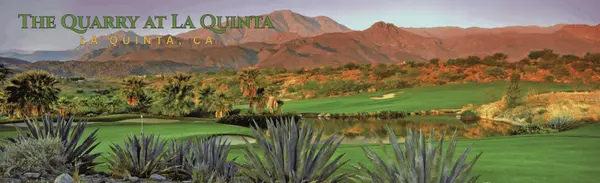
They rise beyond the southern edge of the city, framing fairways, residential streets and resort landscapes with rugged desert terrain.
The mountains do more than create views.
They establish a sense of enclosure and scale. Carefully landscaped residential environments exist immediately beside terrain that remains unmistakably wild. Golf courses appear greener against the rock and desert slopes. Evening light changes the mountains from brown and gray to shades of gold, rose and deep purple.
Early city leaders understood the importance of that relationship and acted to help protect the mountain backdrop.
The result is a landscape in which natural drama and deliberate refinement exist side by side.
Indian Wells Today: Small City, International Reputation
Indian Wells occupies an unusual position within Greater Palm Springs.
Geographically and residentially, it remains intimate. Its international profile, however, is enormous relative to its size.
The BNP Paribas Open brings the global tennis world to the city. Championship golf remains woven into its landscape. Destination resorts attract visitors from around the world. Private clubs maintain traditions established generations ago while newer communities reinterpret desert luxury for contemporary homeowners.
At the same time, Indian Wells continues investing in the assets that support that identity. The city has undertaken significant improvements at the Indian Wells Golf Resort and continues planning for tourism, infrastructure, recreation and long-term quality of life.
That combination of continuity and reinvestment is important.
Indian Wells protects its identity not by standing still, but by being selective about how it moves forward.
Indian Wells Real Estate: Understanding the Lifestyle Behind the Address
For buyers, understanding Indian Wells real estate begins with understanding how many different residential experiences exist within such a compact city.
A home inside an established private country club can offer a very different lifestyle from a residence in a non-golf gated community. Properties near the mountains may emphasize dramatic views and privacy. Golf-course homes introduce considerations of fairway orientation, setbacks, exposure and club membership. Condominium communities may offer another combination of amenities, maintenance and seasonal convenience.
Even within individual country clubs, location matters.
Mountain orientation, fairway position, architectural style, lot size, privacy, renovation quality, club amenities and membership structures can all affect how a property lives and how buyers perceive its value.
Context matters.
The community matters.
The view matters.
The club or neighborhood environment matters.
And ultimately, the right property is the one that supports the way its owner actually wants to experience the desert.
For buyers considering Indian Wells, exploring the individual communities can reveal important differences that aren't apparent from a citywide property search.
For sellers, understanding the particular qualities of the property, community, setting and lifestyle — and communicating those distinctions intelligently — can be equally important.
Indian Wells: Immerse In Luxury
Indian Wells has traveled an extraordinary distance from the hand-dug well that first gave the place its name.
A desert watering place became an agricultural settlement. Agriculture gave way to country clubs and resort living. A small residential community incorporated to protect its independence. Golf became an economic strategy as well as a lifestyle. Tennis placed the city's name on an international stage.
Through each transformation, however, the central idea remained surprisingly consistent.
Indian Wells has continually sought to create an exceptional environment — and then protect what made that environment exceptional.
Today, the result can be experienced in quiet residential streets, manicured fairways, private clubs, destination resorts, mountain views and the extraordinary spectacle of world-class tennis unfolding beneath the desert sky.
For a city of remarkably small scale, Indian Wells has created an extraordinarily large sense of place.
Categories
Recent Posts