Bermuda Dunes Country Club: Golf, History & Classic Desert Living
Some country club communities are defined by what they have recently become. Bermuda Dunes Country Club is distinguished by how long it has been part of the story.
Its history reaches back to the formative years of golf and residential development in the Coachella Valley, when much of the land east of Palm Springs remained open desert and the idea of building destination country club communities across the valley was still taking shape. Developers Ernie Dunlevie and Ray Ryan began construction on Bermuda Dunes on February 14, 1958, creating what would become one of the desert's enduring golf and residential communities.
They turned to noted Southern California golf architect Billy Bell Jr., whose work would also include completing his father's vision for Torrey Pines. The direction Bell received at Bermuda Dunes was remarkably straightforward: build a course capable of testing professional golfers while making the fairways generous enough for everyday players to enjoy. More than six decades later, that philosophy remains visible in a traditional course whose challenge comes without sacrificing playability.
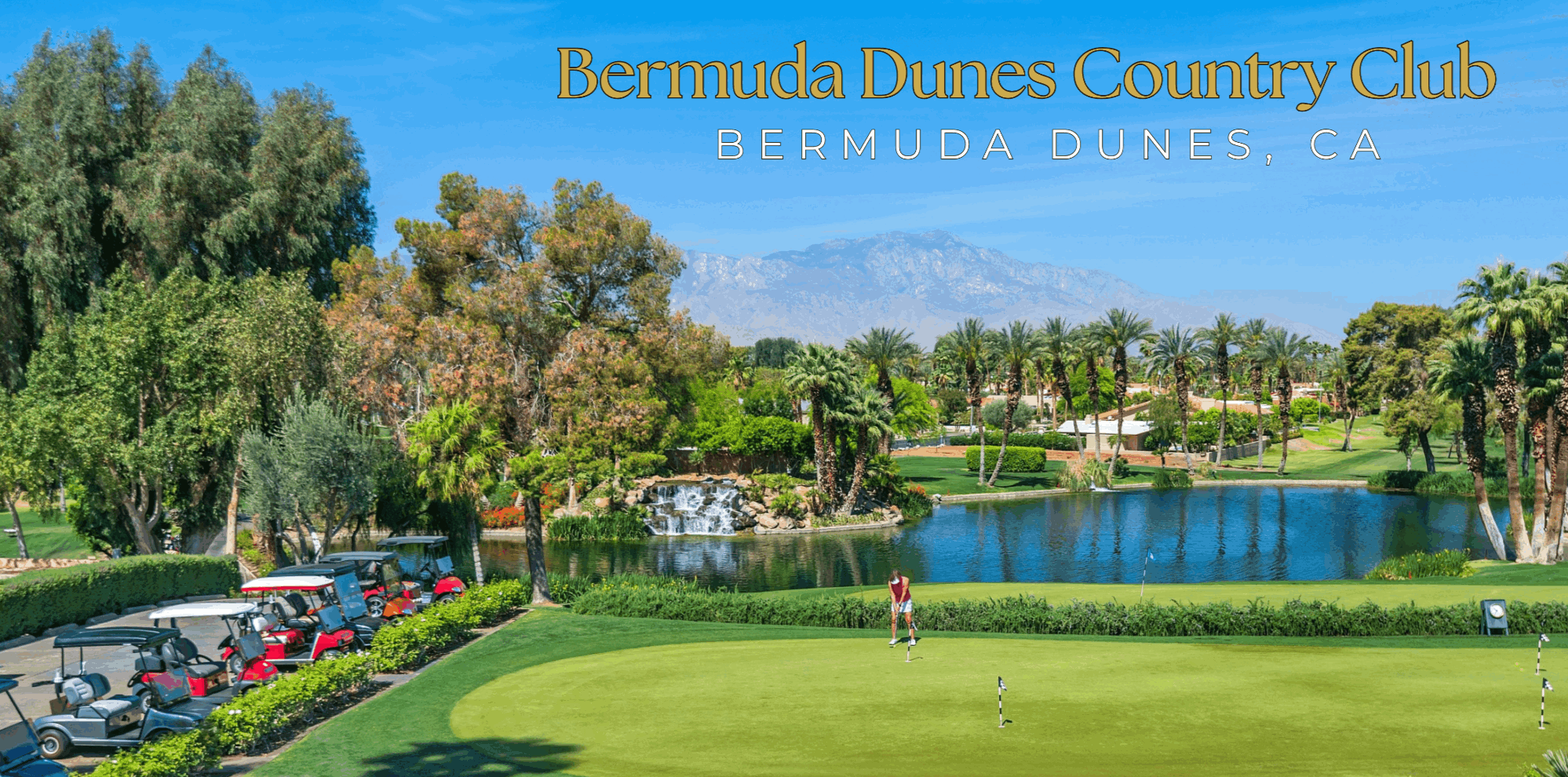
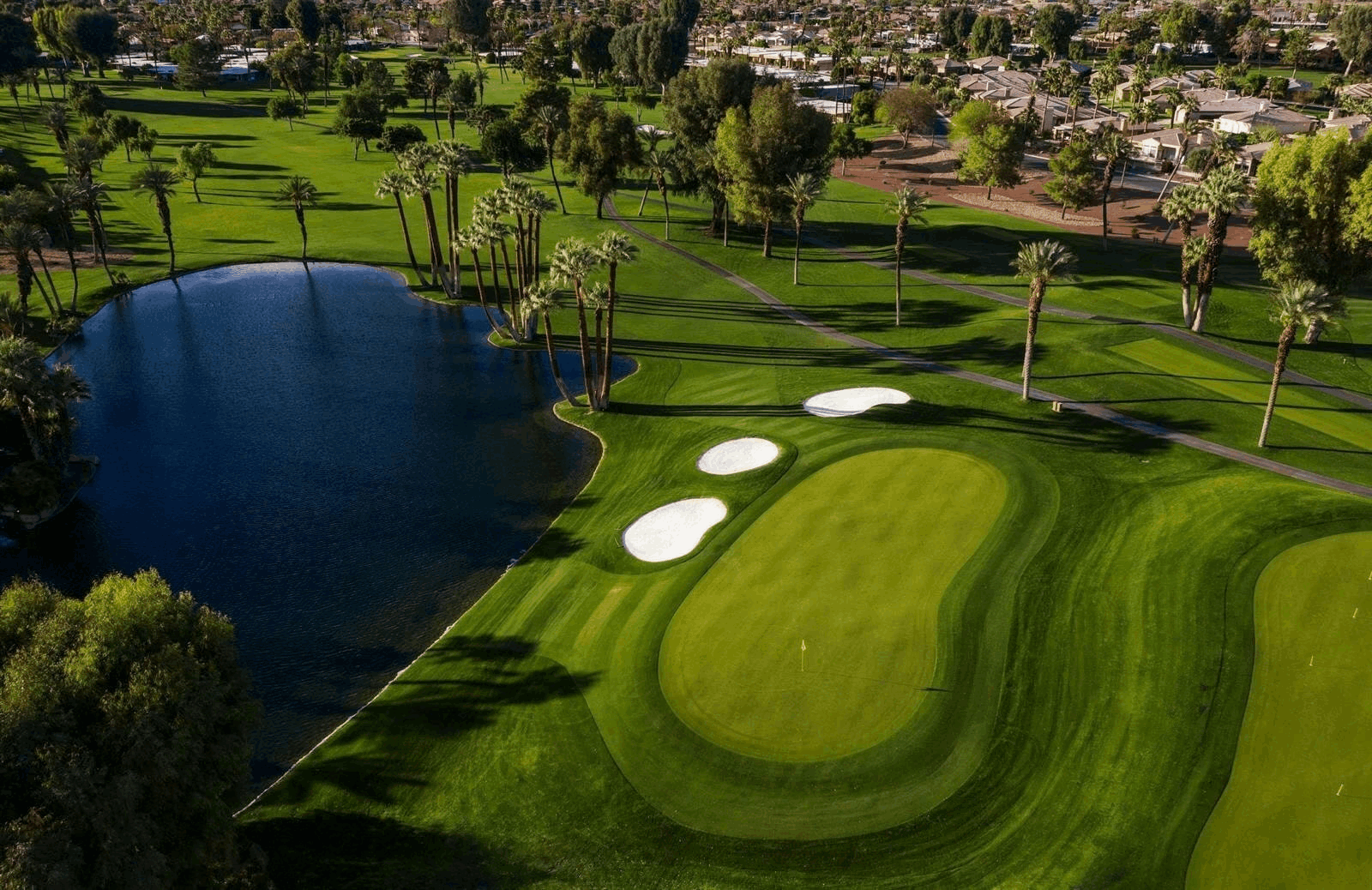
Today, Bermuda Dunes offers 27 holes, arranged as three nine-hole courses that can rotate into three different 18-hole combinations. Mature trees, freshwater lakes, broad fairways and long-established landscaping give the course a character that could not simply be recreated by a new development. It is a landscape that has had decades to mature.
A Front-Row Seat to Desert Golf History
If the course established Bermuda Dunes, professional golf helped make it famous.
Beginning in 1960, Bermuda Dunes became one of the defining venues of the tournament eventually known as the Bob Hope Desert Classic, participating in the event for 50 years through 2009. During those decades, the tournament brought many of professional golf's greatest players together with entertainers, business leaders and other prominent figures, helping establish a style of desert golf culture that became inseparable from the Greater Palm Springs lifestyle itself.
No player illustrates that history better than Arnold Palmer.
Palmer won the inaugural Palm Springs Desert Golf Classic in 1960, beginning a remarkable relationship with the desert tournament. Thirteen years later, Bermuda Dunes became the setting for another milestone: the 62nd and final PGA TOUR victory of Palmer's career.
The 1973 Bob Hope Desert Classic came down to Palmer, Jack Nicklaus and Johnny Miller. Playing the final round at Bermuda Dunes in persistent rain, Palmer shot a bogey-free 69 and defeated Nicklaus and Miller by two strokes. He finished the victory with a birdie on the 18th green — the final PGA TOUR win of a career that had transformed the popularity of professional golf.
Few country clubs can claim such an extraordinary pair of historical bookends: Bermuda Dunes was there when Palmer won the desert tournament for the first time, and it was there when he won on the PGA TOUR for the last time.
Where Hollywood Met the Fairways
Professional golfers were only part of the early Bermuda Dunes story.
As the community developed around the course, it attracted some of Hollywood's most recognizable names. Clark Gable, Cary Grant, William Holden, Eddie Fisher, Debbie Reynolds, Patti Page and Bill Gargan were among the early property owners in the Bermuda Dunes home development.
Their presence reflected something larger happening across the desert during that era. Greater Palm Springs was emerging as a retreat where golf, sunshine, entertainment and residential life intersected. Bermuda Dunes was not built after that culture had already been established — it was one of the communities helping to establish it.
That history can still be felt in the physical character of the neighborhood today.
A Residential Community That Evolved Over Time
Unlike newer master-planned developments where homes may share a relatively narrow period of construction and architectural vocabulary, Bermuda Dunes reflects decades of residential evolution.
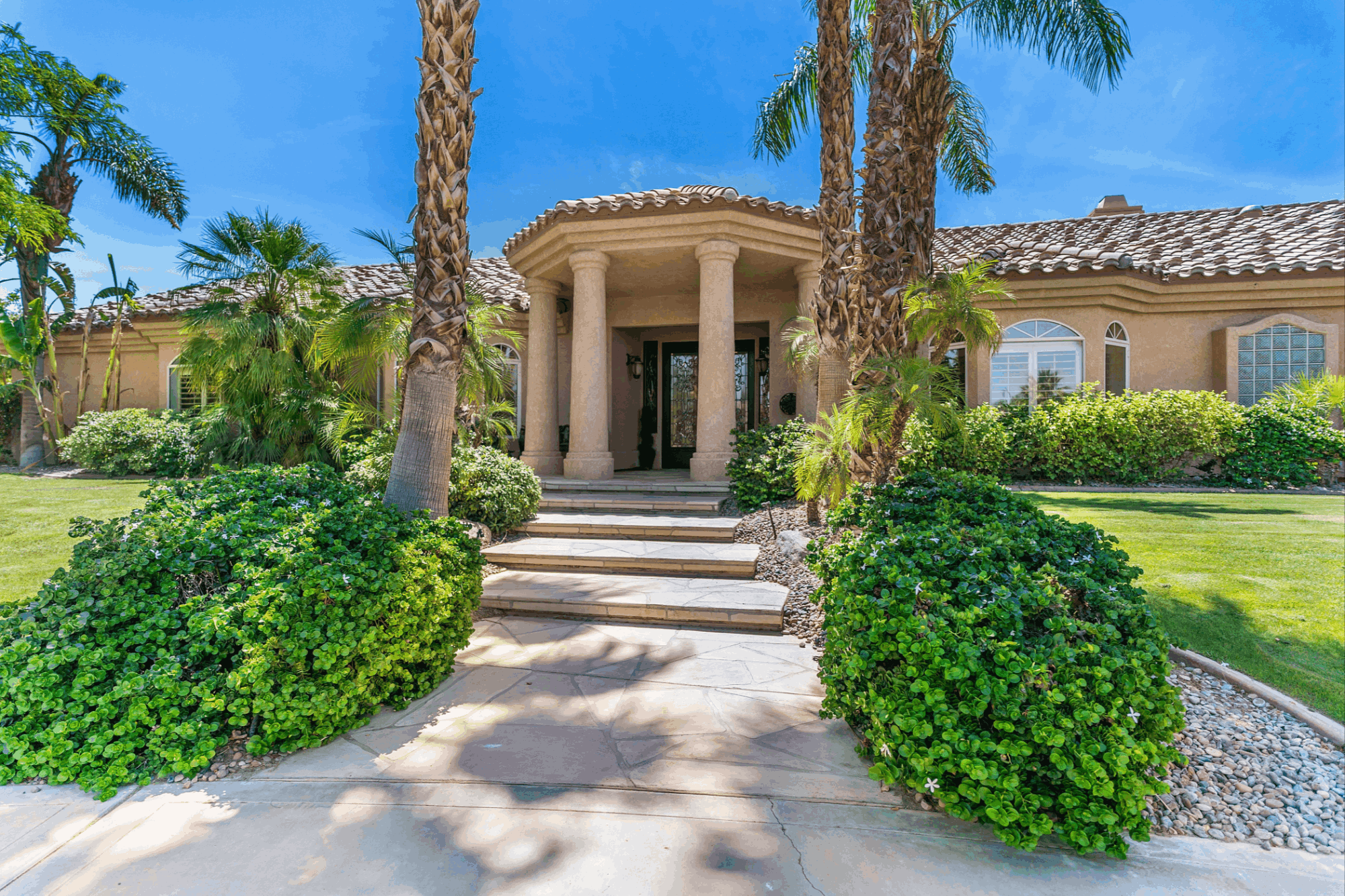
Homes and condominiums developed around the golf environment over many years, creating a community with considerable variety in architecture, scale, renovation and design. Mature landscaping softens the streetscapes, while many residences take advantage of golf course, lake or mountain settings.
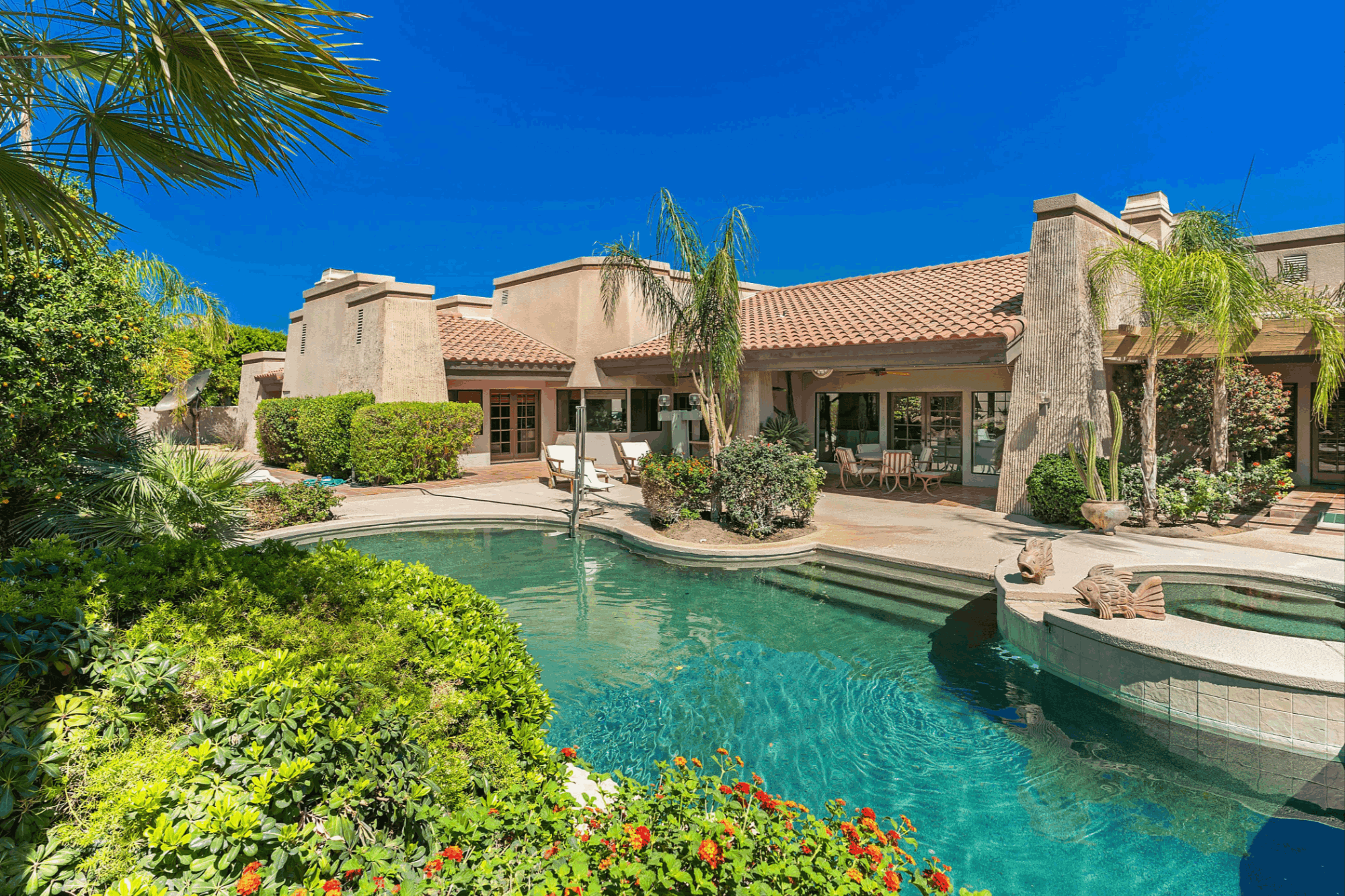
That individuality is part of Bermuda Dunes' appeal.
An established residence may retain the warmth of vaulted wood ceilings, prominent fireplaces and terracotta flooring, while another may have been substantially reimagined for contemporary desert living. Private pools and outdoor living areas extend the homes into the landscape, and the age of the community has allowed trees and gardens to reach a maturity rarely found in newer developments.
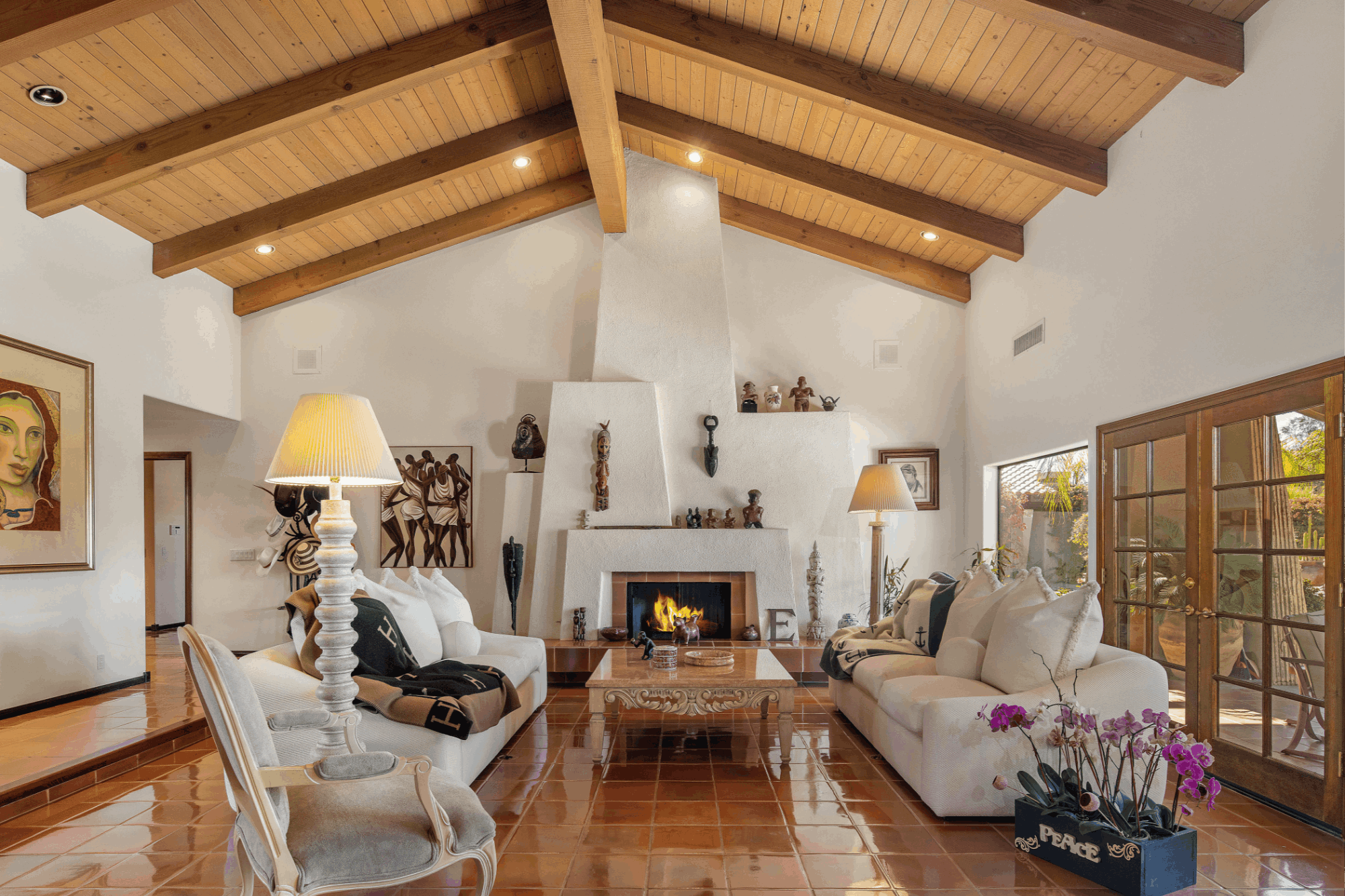
The result is not architectural uniformity. It is character accumulated over time.
The Club Today
While history provides Bermuda Dunes with its identity, the club remains an active private golf and social environment.
Its 27-hole Billy Bell Jr. layout continues to rotate among three 18-hole combinations, with multiple tee options and a design intended to accommodate different levels of play. The club also offers practice facilities, organized golf, dining, fitness, bocce and a calendar of social activities.
Yet reducing Bermuda Dunes to a list of amenities misses what makes it different.
The mature fairways, lakes and trees seen today have been the backdrop to generations of desert life. Professionals competed here when the modern PGA TOUR was still taking shape. Hollywood personalities made homes here as the Coachella Valley was becoming an internationally recognized resort destination. Residential architecture evolved around the course rather than arriving in a single moment.
And Arnold Palmer's history here stretches from the beginning of one of the desert's great tournaments to the final PGA TOUR victory of his career.
That may be the clearest way to understand Bermuda Dunes Country Club today: it is not simply a community with a long history. It is one of the communities that helped create the history of desert golf and country club living in the first place.
Categories
Recent Posts