Vista Canyon: Architectural Desert Living in South Palm Springs
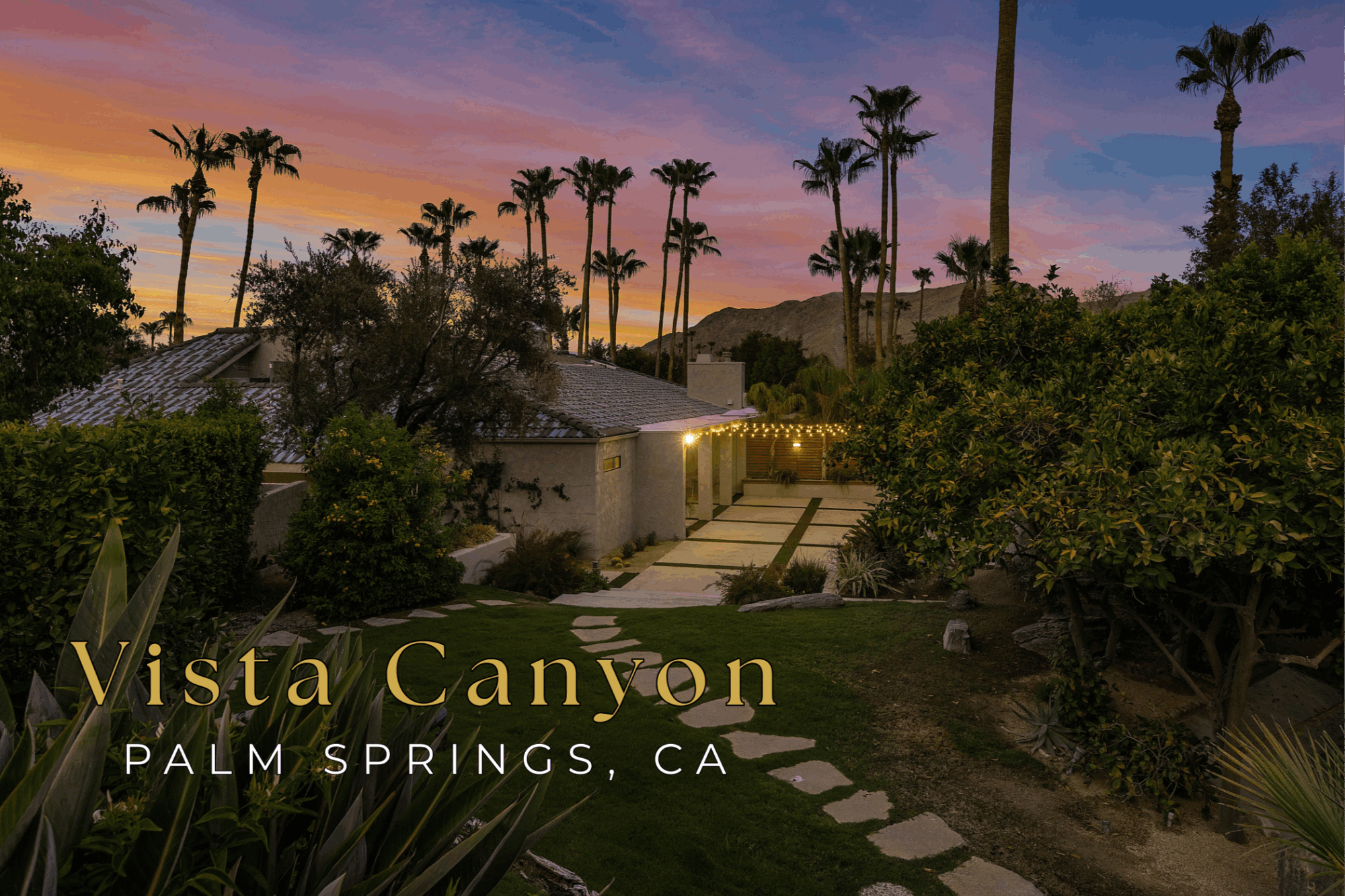
Vista Canyon occupies a particularly private corner of South Palm Springs, where mature landscaping, towering palms and distinctive desert residences sit close against the foothills of the San Jacinto Mountains.
With just 29 homes, it is considerably more intimate than many of the residential communities found throughout Greater Palm Springs. Yet its scale is only part of the story. Vista Canyon also belongs to an important period in Palm Springs architectural history, when designers were exploring forms that moved beyond the lighter glass-and-steel vocabulary most commonly associated with midcentury desert modernism.
Architecture with a Palm Springs Pedigree
Vista Canyon was designed by architect Laszlo Sandor, a Budapest-born architect whose Palm Springs work included residences, condominium developments and the striking Seventh-day Adventist Church on South Sunrise Way. Sandor had previously worked with noted desert architect William F. Cody, but developed an architectural language of his own — one Palm Springs Life describes in part through the heavier forms and Brutalist influence evident in his work.
Architectural records date Vista Canyon to 1979 and identify Shelden Slaten Co. as the developer. The project was originally envisioned on a larger scale, with an initial phase of 17 residences and three floor-plan configurations. The community that ultimately emerged is much smaller, with 29 homes today.
That smaller scale has become one of Vista Canyon's strengths. Rather than feeling like a large planned development, the community reads as a secluded residential enclave woven into the landscape of South Palm Springs.
Homes with Volume, Privacy and Individual Character
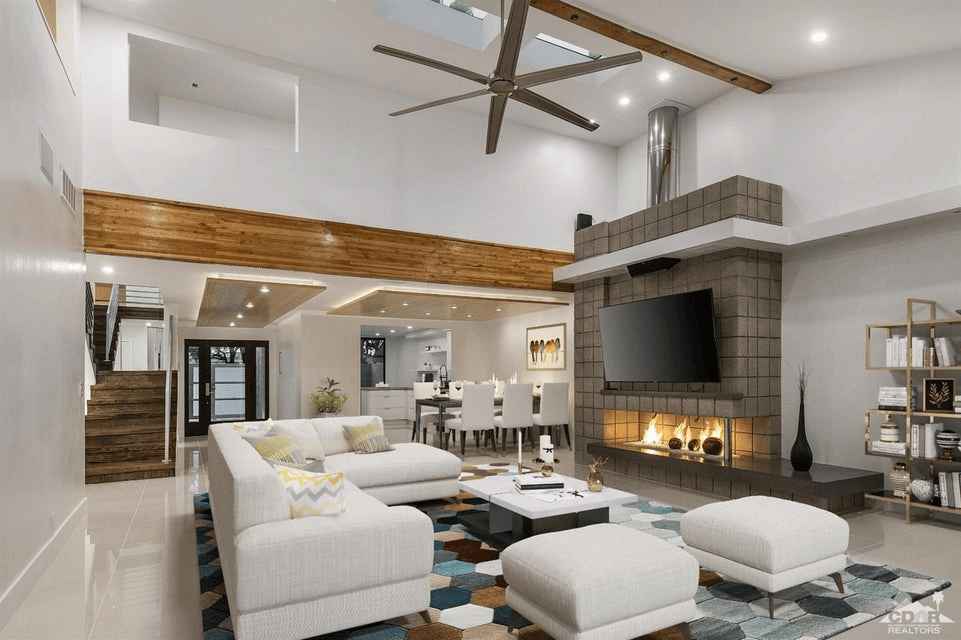
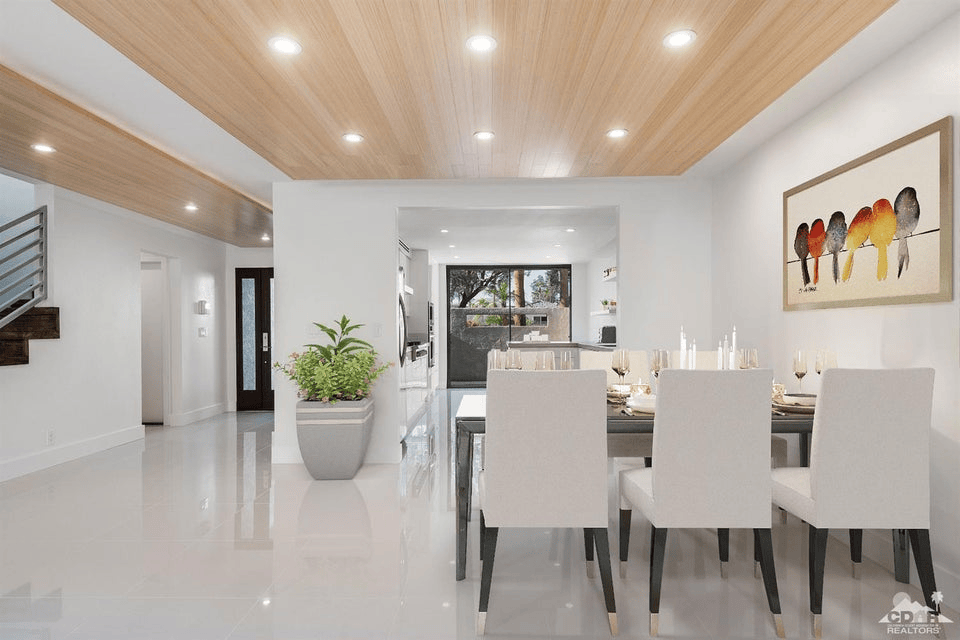
Vista Canyon residences range substantially in size and configuration, with examples extending from approximately 1,843 square feet to nearly 3,000 square feet. Depending on the residence, designs may incorporate high or vaulted ceilings, fireplaces, private patios, broad areas of glass and strong connections between interior and outdoor spaces.
More than four decades after the community was developed, individual homes naturally reflect varying degrees of renovation. That makes it important not to treat the finishes of any single residence as representative of Vista Canyon as a whole. What remains consistent is the architectural framework — the sense of volume, privacy and relationship to the surrounding desert setting.
The community is also located on fee-simple land, an important distinction in Palm Springs, where many residential communities are situated on leased land. Current community records identify two pools and spas and a tennis court among the shared amenities.
Tucked Against the Mountains
Vista Canyon's location near South Palm Canyon Drive and Avenida Granada places it close to the San Jacinto foothills while remaining only minutes from downtown Palm Springs. The setting provides something increasingly difficult to manufacture: mature landscaping, established architecture and the feeling of a community that has occupied its place in the desert for decades.
There is no sprawling clubhouse or elaborate resort amenity program here, nor does Vista Canyon need one. Its appeal is quieter.
It comes from the architecture. The intimate scale. Owned land. Mountain surroundings. And homes that can feel distinctly individual despite belonging to the same small community.
In a city celebrated around the world for residential design, Vista Canyon offers its own lesser-known chapter of the Palm Springs architectural story.
It doesn't need to be large to be distinctive.
Categories
Recent Posts