PGA WEST: Golf, Lifestyle & Real Estate in La Quinta

PGA WEST occupies a remarkable place in the story of La Quinta.
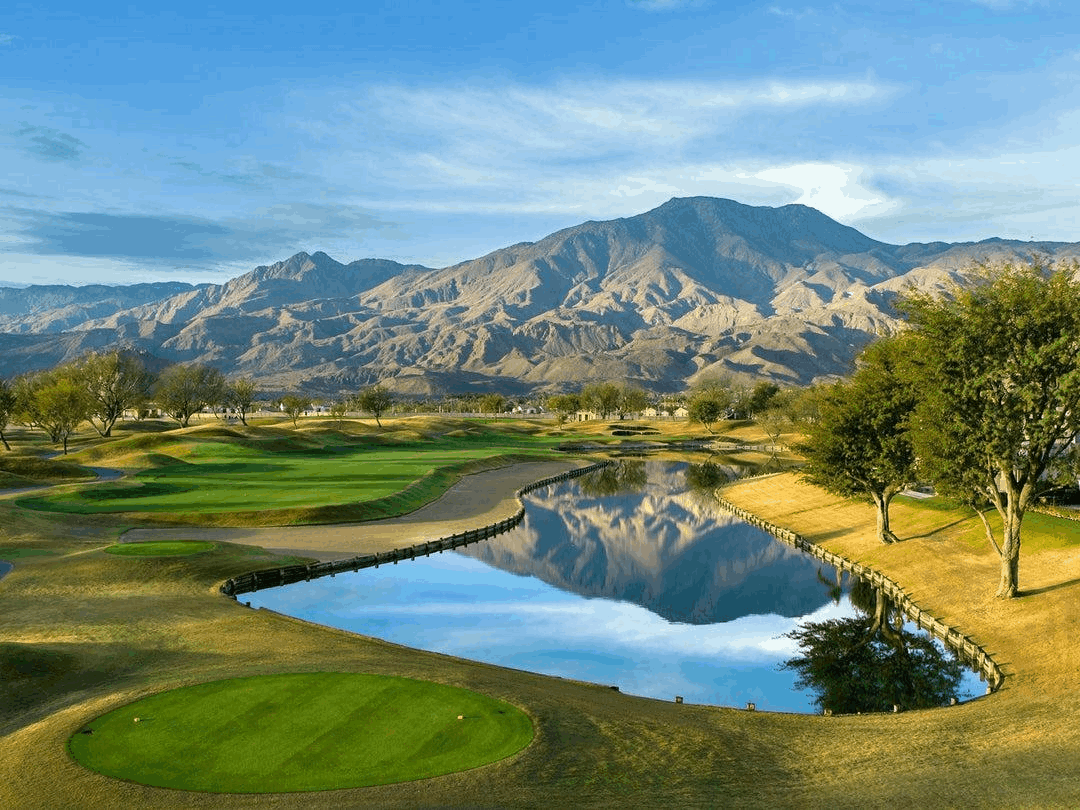
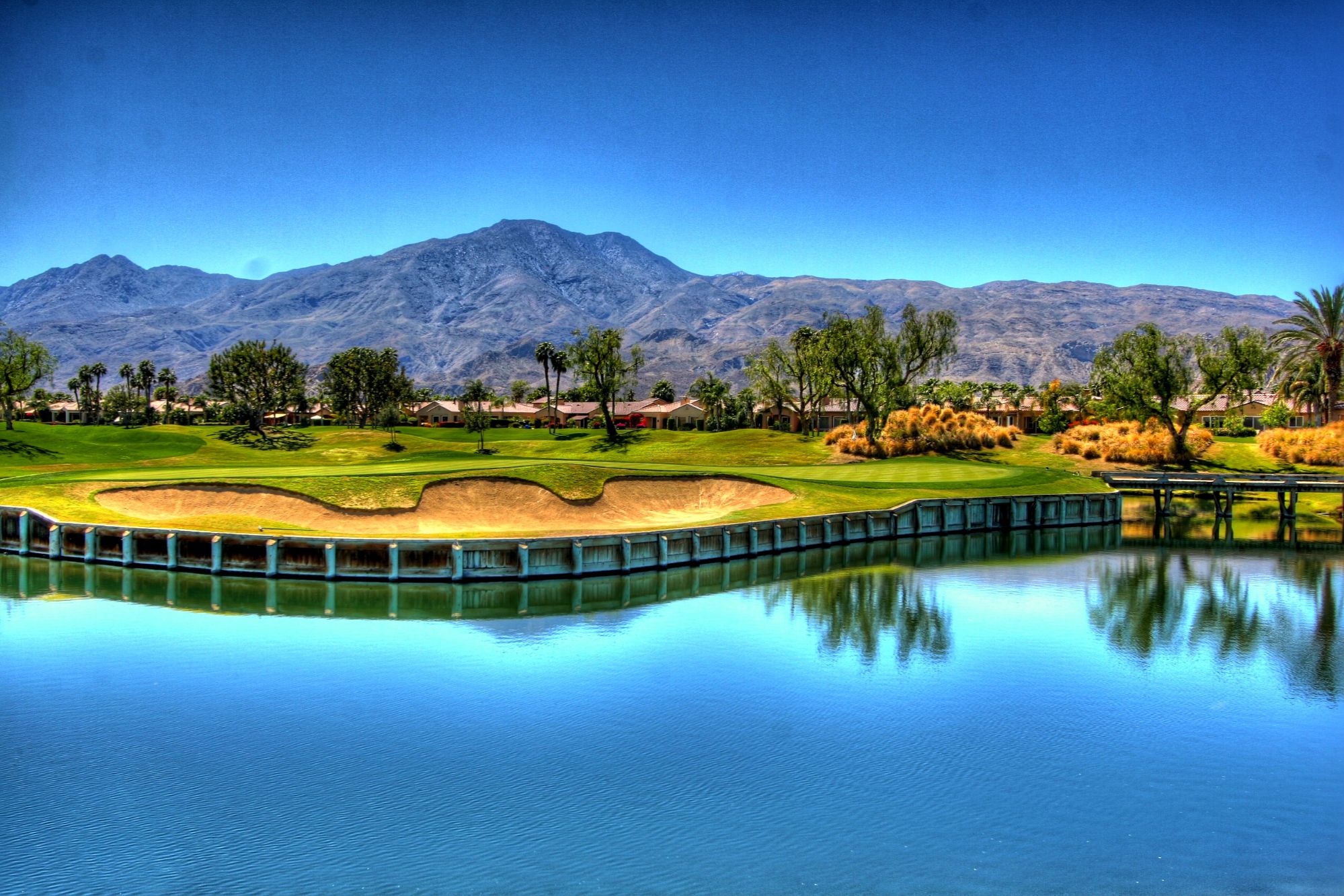
Set against the Santa Rosa Mountains at the southern edge of the city, this expansive golf and residential community has become one of the most recognizable names in desert golf. Championship courses designed by some of the game's legendary figures wind through a landscape of lakes, fairways, desert terrain and residential neighborhoods, creating a setting where golf history and everyday life have developed side by side.
For golfers, PGA WEST is known as The Western Home of Golf in America®. For those who live here, however, the story extends well beyond the game.
It is also a community of distinctive homes, private outdoor spaces, clubhouses, recreation, social life and extraordinary mountain scenery—all within one of La Quinta's most established resort environments.
A Vision That Helped Shape Modern La Quinta
The origins of PGA WEST reach back to a transformational period in La Quinta's development.
Developers Ernie Vossler and Joe Walser Jr., through Landmark Land Company, had already become part of the area's evolution after acquiring the historic La Quinta Resort in 1977. Their vision expanded dramatically during the golf development boom of the 1980s, eventually extending southward into what would become PGA WEST.
The Pete Dye Stadium Course opened in 1986, followed by the Arnold Palmer Private Course. By 1989, the Jack Nicklaus Tournament and Nicklaus Private courses had joined them. Tom Weiskopf's Private Course followed in 1996, and the Greg Norman Course opened in 1999.
Together, these six courses form the core golf experience at The Club at PGA WEST. The top-tier Distinguished Desert Golf Membership expands that experience to nine courses, adding the private Citrus Course along with Pete Dye's Mountain and Dunes courses at La Quinta Resort & Club.
Few places have assembled a collection of course architects with names as recognizable as Pete Dye, Arnold Palmer, Jack Nicklaus, Tom Weiskopf and Greg Norman.
Their designs helped establish PGA WEST as far more than another desert golf development. They helped give it an identity.
The Western Home of Golf in America®
Golf is woven deeply into PGA WEST's history.
The community has hosted PGA TOUR professionals, senior professionals, collegiate competitors and generations of accomplished amateur golfers. The Bob Hope Classic brought PGA TOUR competition to PGA WEST in 1987, beginning a tournament relationship that would produce some of the most memorable moments in desert golf.
One of those came during the 1988 Skins Game, when Lee Trevino made a hole-in-one on the famous island-green 17th hole of Pete Dye's Stadium Course—appropriately nicknamed “Alcatraz.”
I remember watching that shot on television from my home in Indiana.
At the time, PGA WEST was a place I knew from afar, part of the California desert golf world I saw on television.
Eleven years later, I was standing here in the desert when David Duval produced another unforgettable PGA WEST moment.
In the final round of the 1999 Bob Hope Chrysler Classic, Duval shot 59 on the Arnold Palmer Private Course, finishing with an eagle on the 18th hole to win the tournament.
Watching a round like that in person was extraordinary. By then I was living in the desert, and PGA WEST was no longer a distant place on television. It had become part of the golf landscape I knew firsthand.
Those two memories—Trevino in 1988 and Duval in 1999—remain personal reminders of just how long PGA WEST has occupied a prominent place in the history of desert golf.
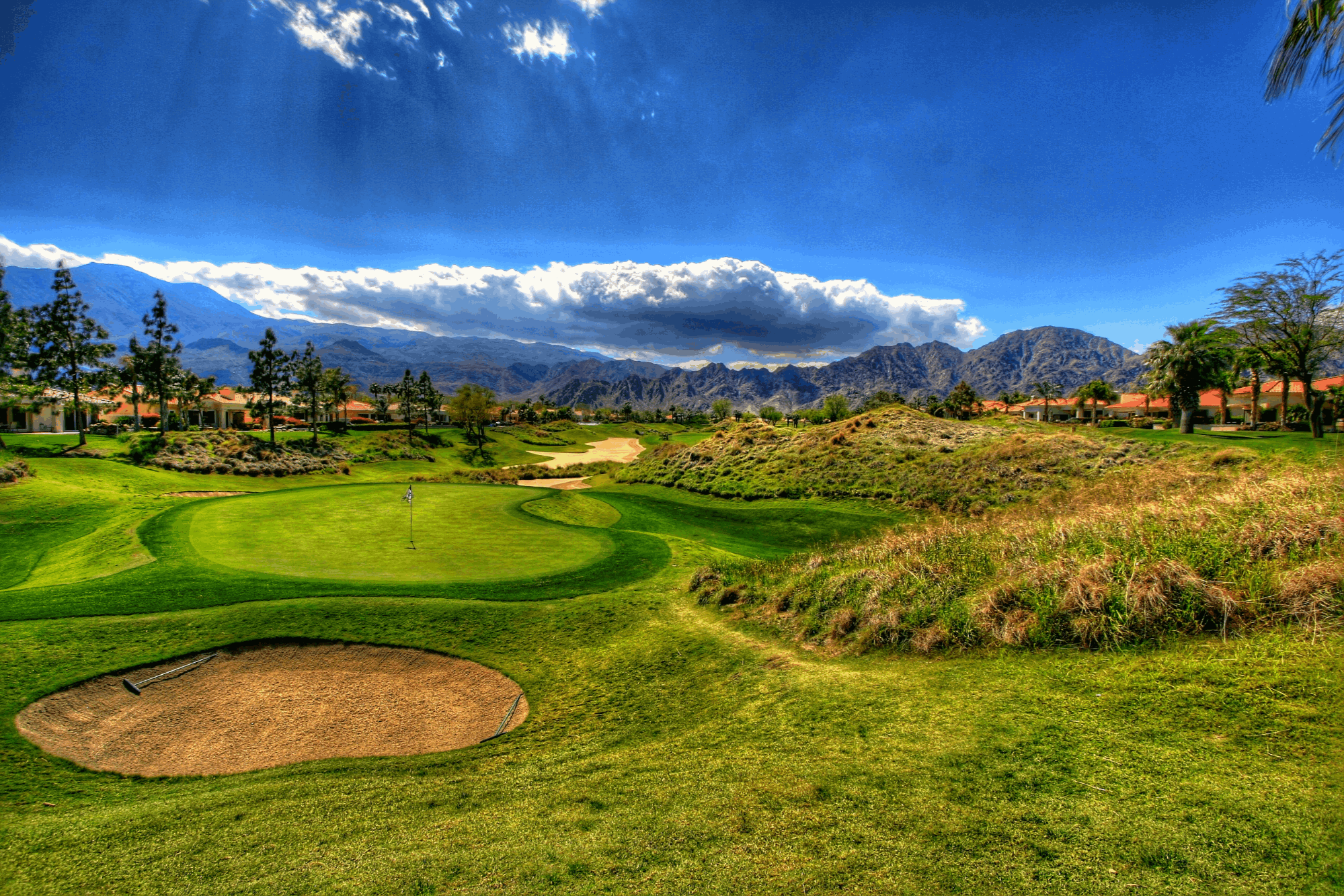
The Six Courses of PGA WEST
Within The Club at PGA WEST, six championship courses create an unusually varied golf environment.
The three private courses—the Arnold Palmer Private, Jack Nicklaus Private and Tom Weiskopf Private—each bring a distinctly different architectural character to the club experience.
Palmer's course becomes especially dramatic along its finishing stretch, where holes move directly against the rugged Santa Rosa Mountains. The setting can feel almost theatrical, with manicured fairways meeting massive natural rock formations.
The Nicklaus Private Course provides a different test, using elevated tees, shaped greens and changing sightlines to create a strategic challenge within the residential landscape.
Weiskopf's design introduces another personality, with generous fairways, large greens and elements inspired by traditional links golf.
The other three PGA WEST courses are the Pete Dye Stadium Course, Jack Nicklaus Tournament Course and Greg Norman Course.
The Stadium Course remains perhaps the most famous—and intimidating—name in the collection. Pete Dye created a course filled with visual deception, dramatic bunkering and memorable risk-reward decisions, including the celebrated 17th at Alcatraz.
The Nicklaus Tournament Course combines tournament-caliber golf with a striking desert setting and remains part of the current course rotation for The American Express.
Greg Norman's design offers yet another interpretation of desert golf, using broad native areas, brilliant white bunkers, water and a comparatively restrained amount of manicured turf.
The result is something unusual even among major golf communities: golfers can remain within PGA WEST while experiencing courses that look, play and feel markedly different from one another.
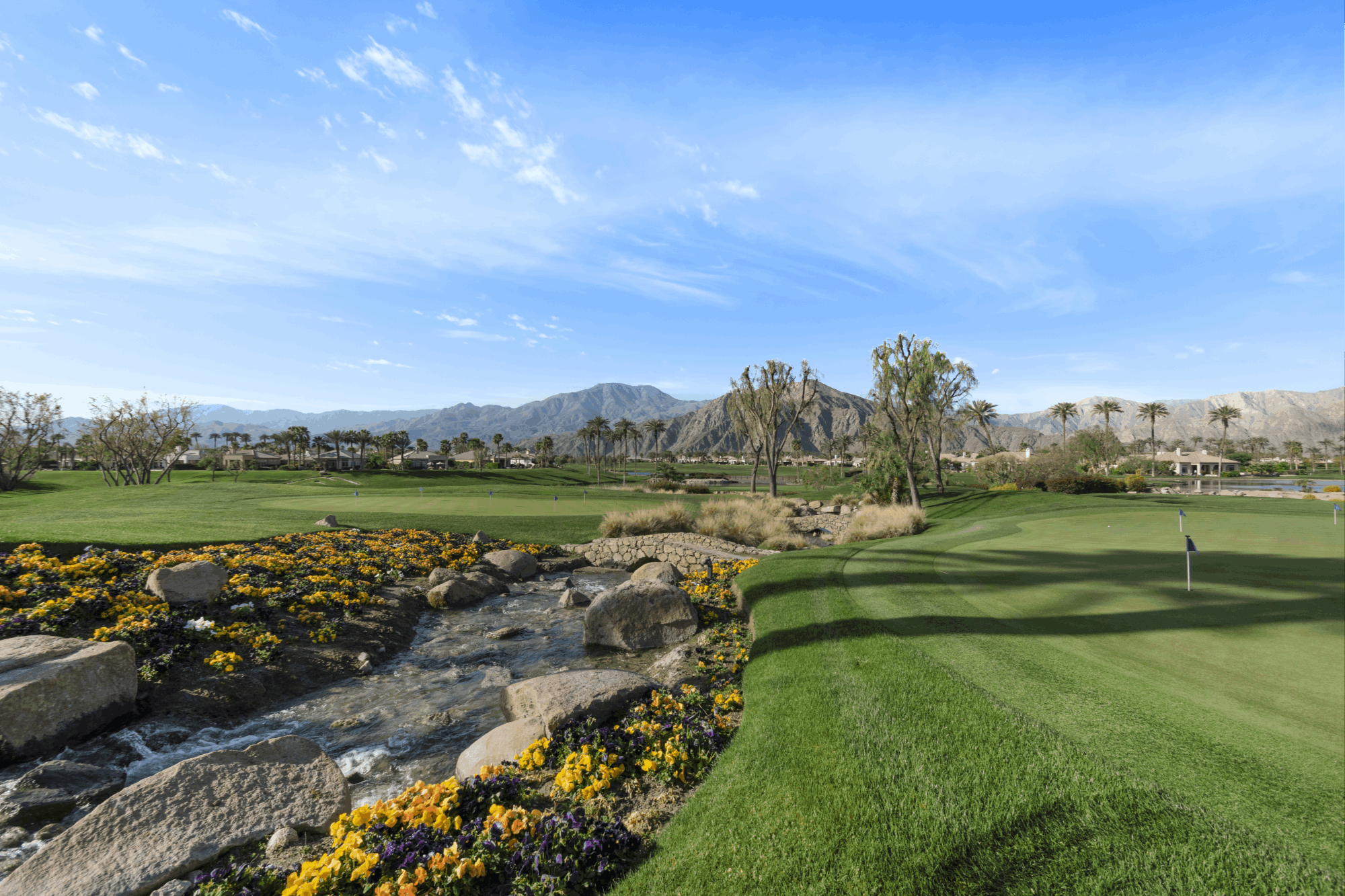
A Tournament Tradition That Continues
Professional golf remains part of the PGA WEST experience.
Today, The American Express continues the desert tournament tradition once associated with the Bob Hope Classic. PGA WEST's Pete Dye Stadium Course and Nicklaus Tournament Course join nearby La Quinta Country Club in the tournament rotation, bringing many of the world's leading players back to La Quinta each winter.
For residents, tournament week changes the rhythm of the community.
Grandstands rise. Television crews arrive. Practice areas become stages for some of the best players in the world. Familiar fairways suddenly become part of a nationally televised PGA TOUR event.
Then the tournament moves on, the grandstands eventually disappear, and PGA WEST returns to the daily rhythms of club and residential life.
That contrast is part of its character: a place capable of hosting professional golf on a worldwide stage while remaining home to thousands of people who simply enjoy living in the desert.
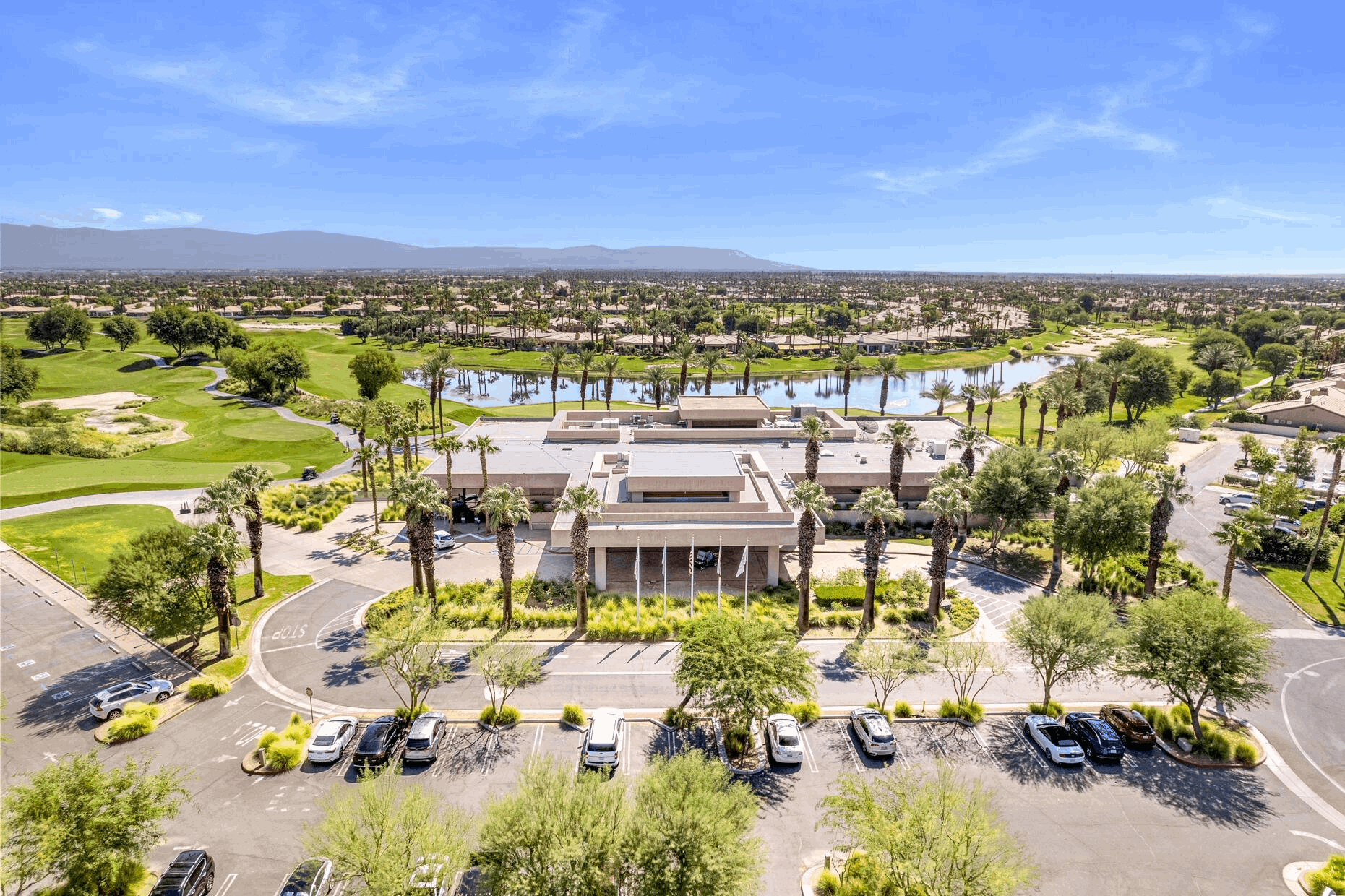
Life Beyond the Fairways
Despite its name and reputation, PGA WEST is not solely a golf community.
The club environment has grown into a broader recreational and social experience, with tennis, pickleball, fitness, swimming, bocce, dining and an active calendar of member activities and events.
The Sports Club has expanded that dimension considerably, providing a central setting for fitness and racquet sports as well as pools, casual dining and other recreational amenities.
That matters because not everyone who chooses PGA WEST wants golf to define every day.
Some residents may begin the morning on a tennis or pickleball court. Others head to a fitness class, meet friends for lunch, walk the neighborhood, spend an afternoon beside the pool or simply enjoy the privacy of their own home.
Golf may have put PGA WEST on the map.
The lifestyle is what makes it a community.
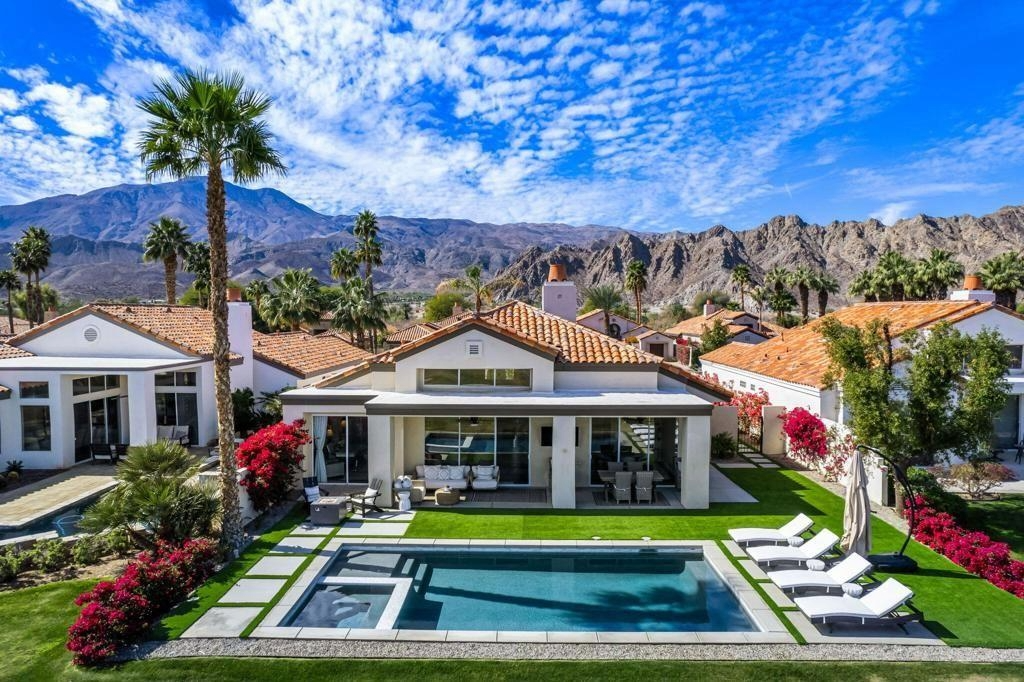
A Residential Community Woven Through the Landscape
One of the defining characteristics of PGA WEST is the relationship between its homes and the surrounding landscape.
Residential neighborhoods extend throughout an enormous network of golf courses, lakes and landscaped open space. In some areas, homes sit directly along fairways. Elsewhere, residences overlook water, mountains or interior neighborhood settings.
The housing itself is equally varied.
PGA WEST includes condominiums, attached and detached residences, traditional desert homes, extensively remodeled properties, newer contemporary designs and substantial custom estates. Some residences emphasize lock-and-leave convenience, while others provide large private outdoor environments built for full-time desert living and entertaining.
That variety gives buyers considerably more choice than the PGA WEST name alone might suggest.
There is no single “PGA WEST house.”
Architecture, age, location, views, golf-course orientation, HOA structure and proximity to club amenities can vary significantly from one neighborhood to another.
Indoor-Outdoor Living in the Desert
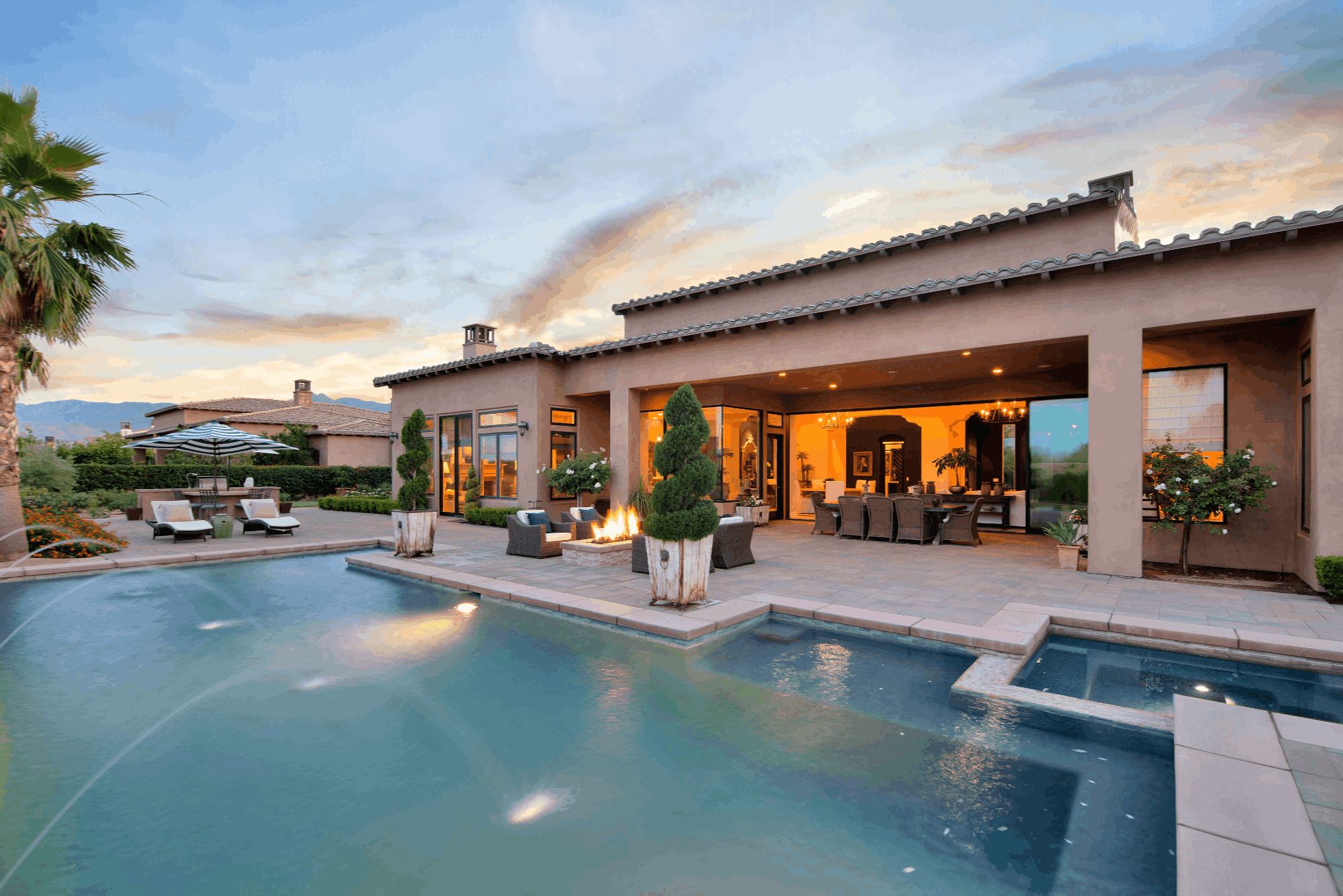
Many PGA WEST homes were designed around one of the fundamental pleasures of living in La Quinta: the ability to move easily between indoor and outdoor spaces.
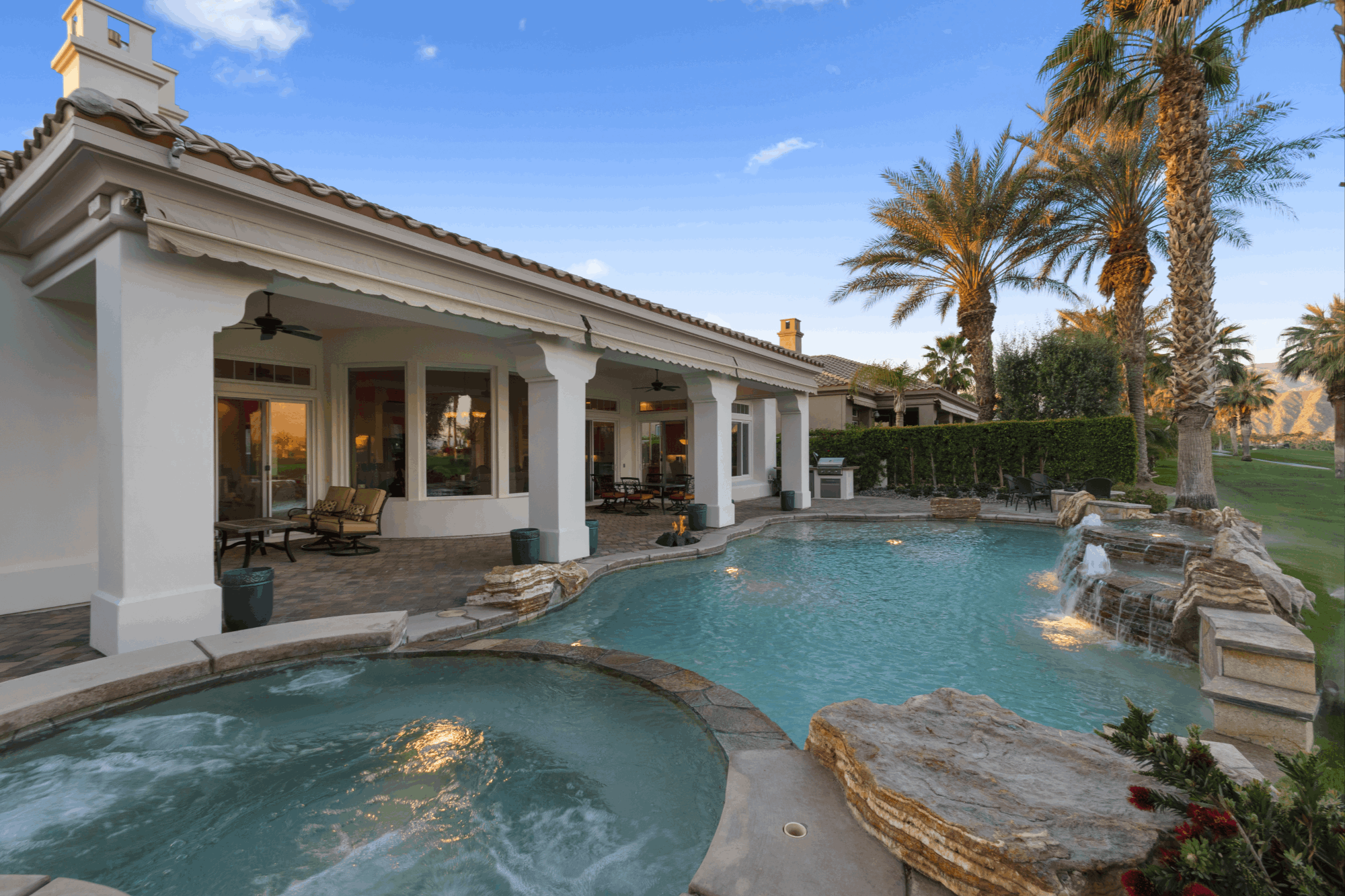
High ceilings, large windows and expansive doors bring desert light into the home, while patios, courtyards, swimming pools and spas extend living areas outdoors.
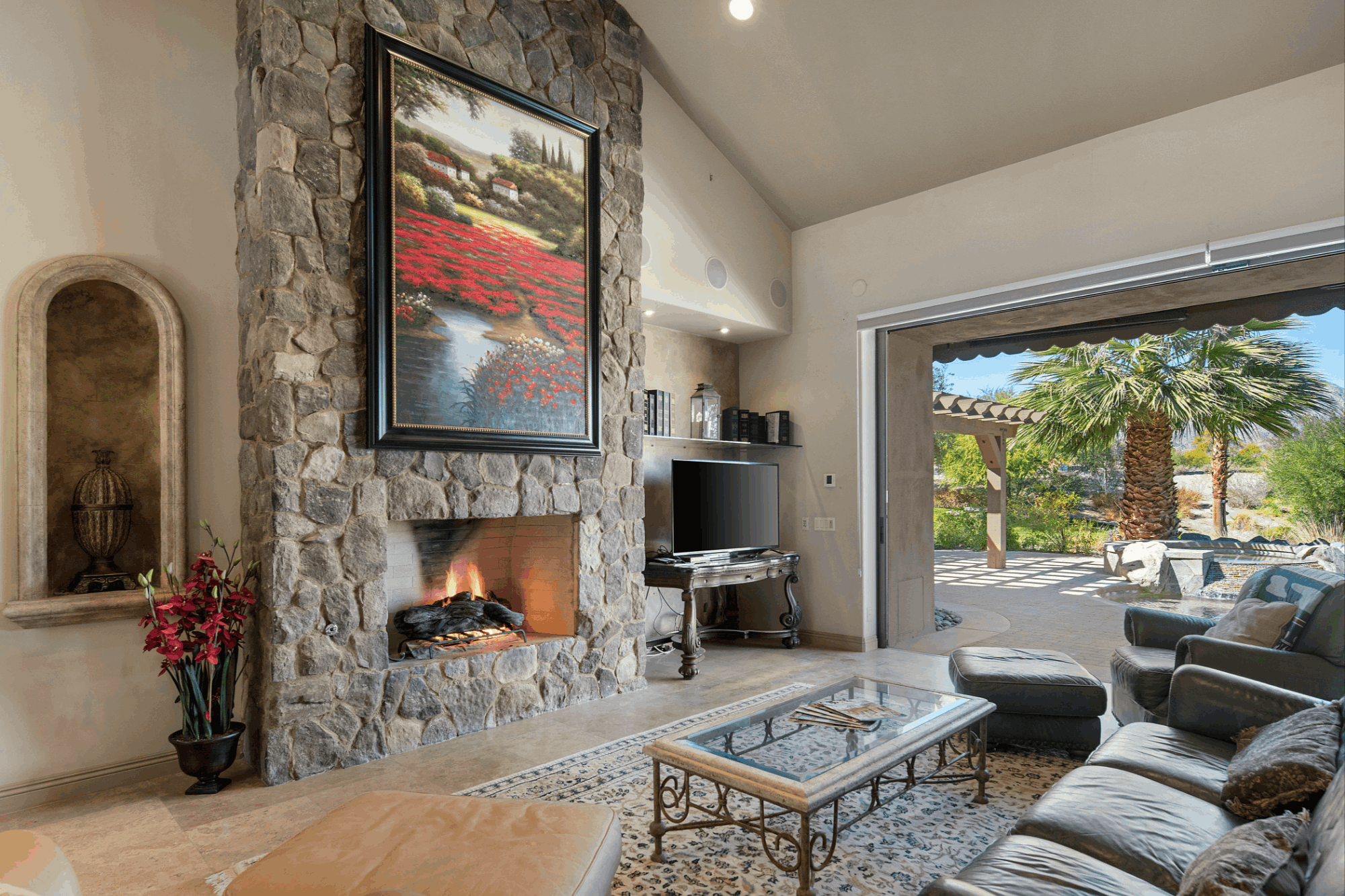
For golf-course properties, the fairway often becomes part of the visual landscape.
For other homes, the Santa Rosa Mountains provide the dominant backdrop.
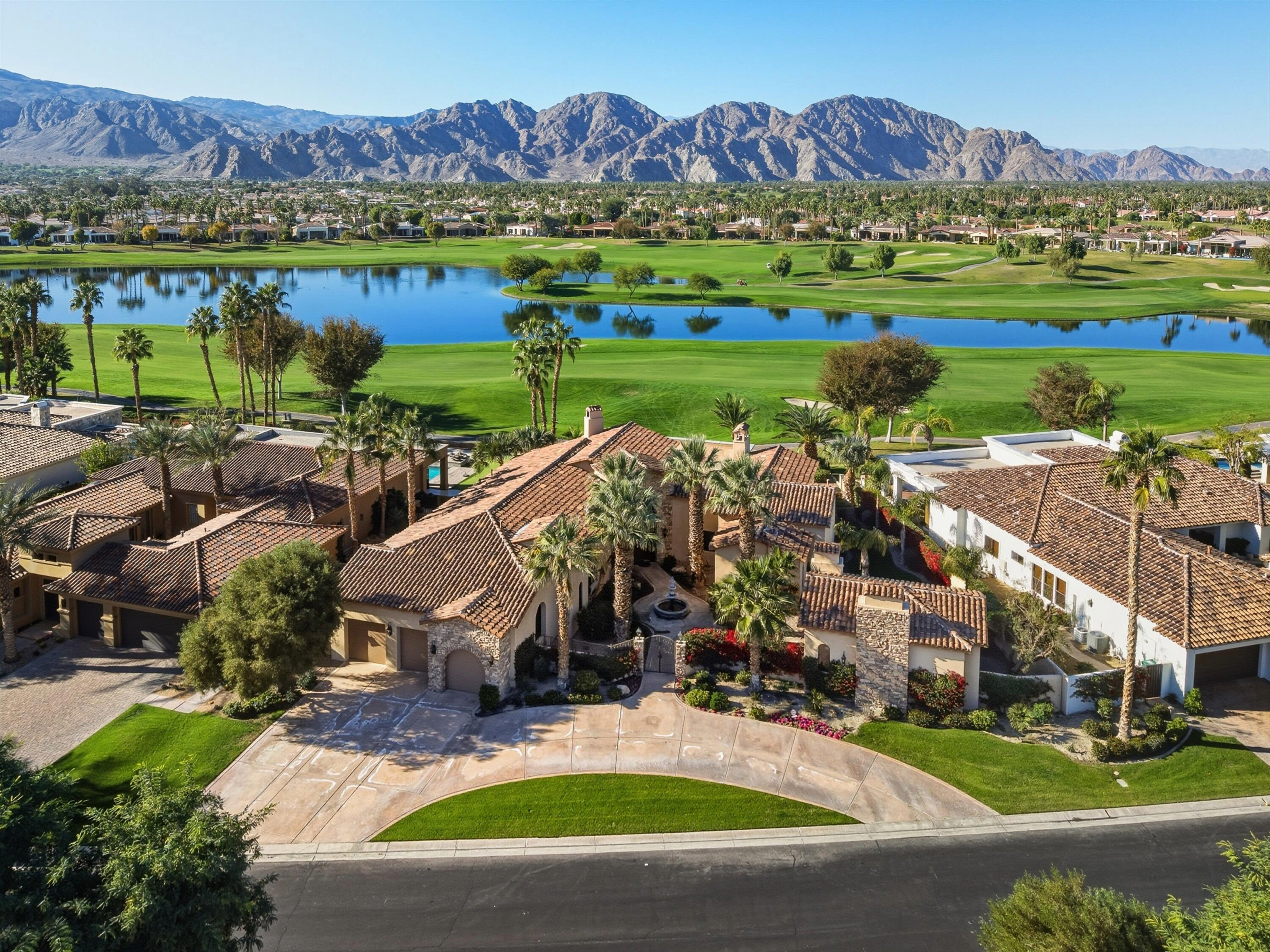
And sometimes the two come together—home, pool, golf course, lake and mountains occupying different layers of the same view.
Those relationships are difficult to appreciate from a floor plan or list of amenities. They are experienced in the changing light across the mountains, the long views across a fairway, an evening beside the pool or the quiet of a desert morning before the day begins.
PGA WEST Real Estate
Buying a home at PGA WEST requires looking beyond bedroom counts, square footage and price.
The size and complexity of the community make location within PGA WEST particularly important. Two homes with similar specifications can provide very different experiences depending on neighborhood, architectural style, orientation, view corridor, proximity to golf or club facilities, HOA structure and the type of outdoor environment surrounding the property.
Golf and club membership should also be evaluated separately from home ownership. Membership opportunities, privileges and costs can change, and the appropriate membership depends on how an owner intends to use the club.
For some buyers, golf is the priority.
For others, it may be mountain views, a private pool, newer architecture, seasonal convenience, club amenities or simply the atmosphere of living within one of La Quinta's most recognizable communities.
Understanding those distinctions is where local knowledge becomes particularly valuable.
An Enduring Part of La Quinta
PGA WEST has been evolving for four decades, yet its fundamental appeal remains remarkably easy to understand.
The names associated with its golf courses are legendary. Its tournament history is genuine. Its recreational and social offerings extend well beyond golf. Its residential neighborhoods provide an unusually broad range of homes and lifestyles.
And surrounding all of it is the landscape.
Fairways stretch toward rugged mountains. Lakes reflect palms and desert skies. Homes open onto private pools and outdoor living spaces. Golf carts move quietly through neighborhoods where some of the most memorable moments in professional golf have taken place just beyond the patio.
That combination of history, sport, community, real estate and extraordinary desert geography is what distinguishes PGA WEST.
It is why the name has been associated with La Quinta for generations—and why PGA WEST remains one of the defining residential and golf communities of the Greater Palm Springs desert.
Categories
Recent Posts