La Quinta Cove: La Quinta, CA
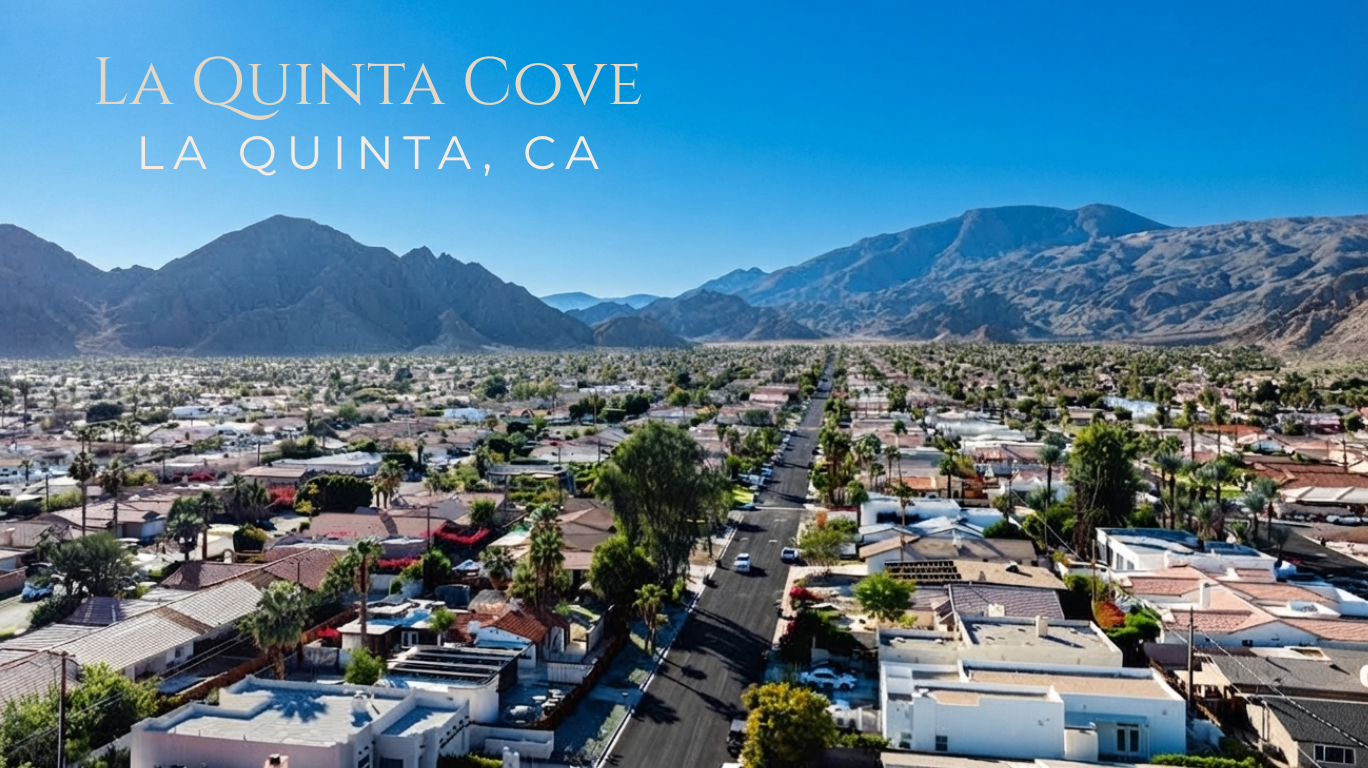
There are places in the desert where the mountains provide a beautiful backdrop. In La Quinta Cove, they feel like part of the neighborhood.
Set against the dramatic slopes of the Santa Rosa Mountains, La Quinta Cove occupies one of the most distinctive settings in Greater Palm Springs. Residential streets extend toward rugged mountain walls, hiking trails begin near the neighborhood itself, and the changing desert light can transform the surrounding rock from muted earth tones to deep shades of gold and rose.
But the appeal of the Cove extends well beyond its setting. It is also one of La Quinta's earliest residential neighborhoods, with a history that reaches back to the city's formative years, an eclectic residential character unlike most master-planned desert communities, and an unusually close relationship between neighborhood life, open desert and the village atmosphere of Old Town La Quinta.
From Vale La Quinta to Today's Cove
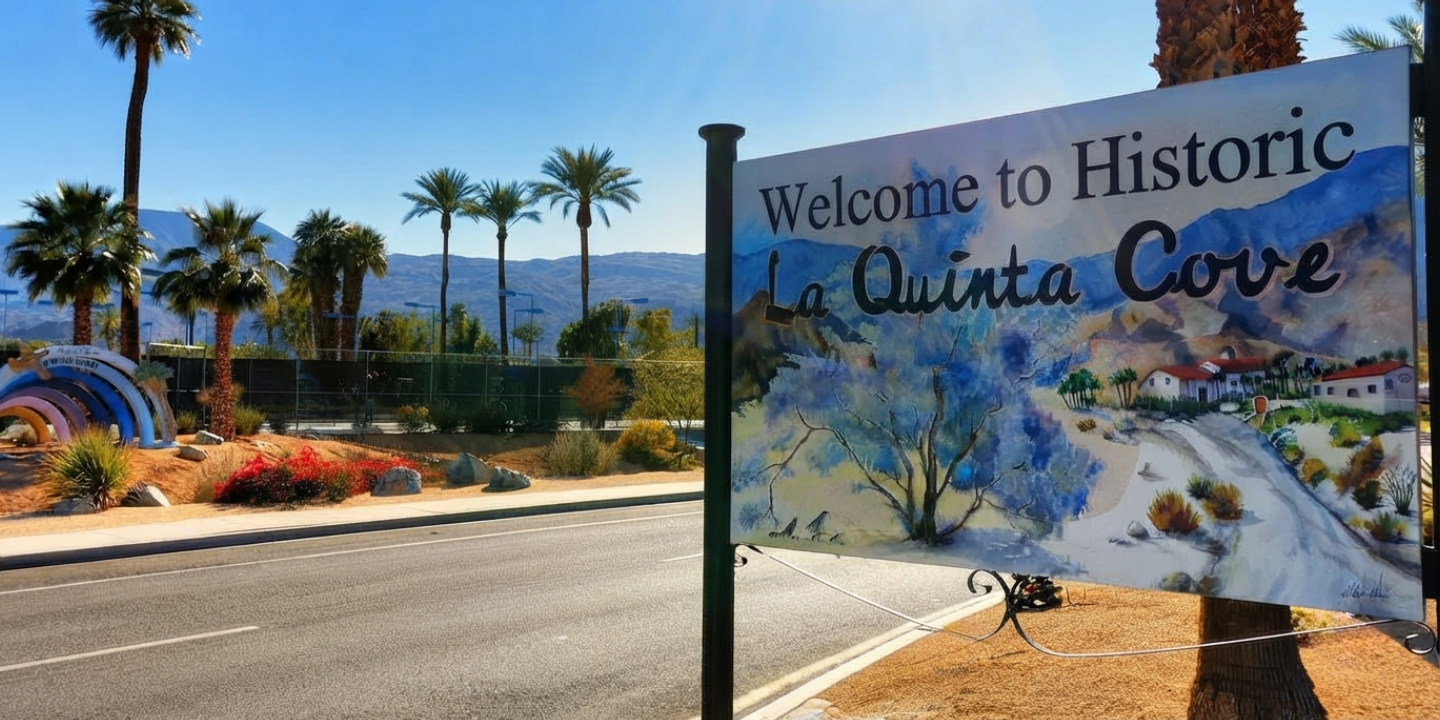
Long before La Quinta became the city we know today, developer Harry Kiener envisioned a winter residential community in an area then known as Marshall's Cove, a naturally sheltered setting bounded on three sides by the Santa Rosa Mountains.
The residential portion of Kiener's plan was formally established in 1933 as the Santa Carmelita de Vale subdivision and marketed as "Vale La Quinta." His broader vision included not only residences, but also a nearby commercial village and private resort club, creating an early framework for the combination of residential and recreational desert living that would eventually become so closely associated with La Quinta.
Evidence of those beginnings remains part of the Cove's identity today. The City of La Quinta's Historic Resources Survey recognizes a La Quinta Cove Thematic Historic District encompassing portions of the original Santa Carmelita de Vale subdivision.
Nearly a century after those first plans were drawn, the Cove has evolved considerably, but it has never lost the sense that it developed organically over time rather than emerging all at once from a single master plan.
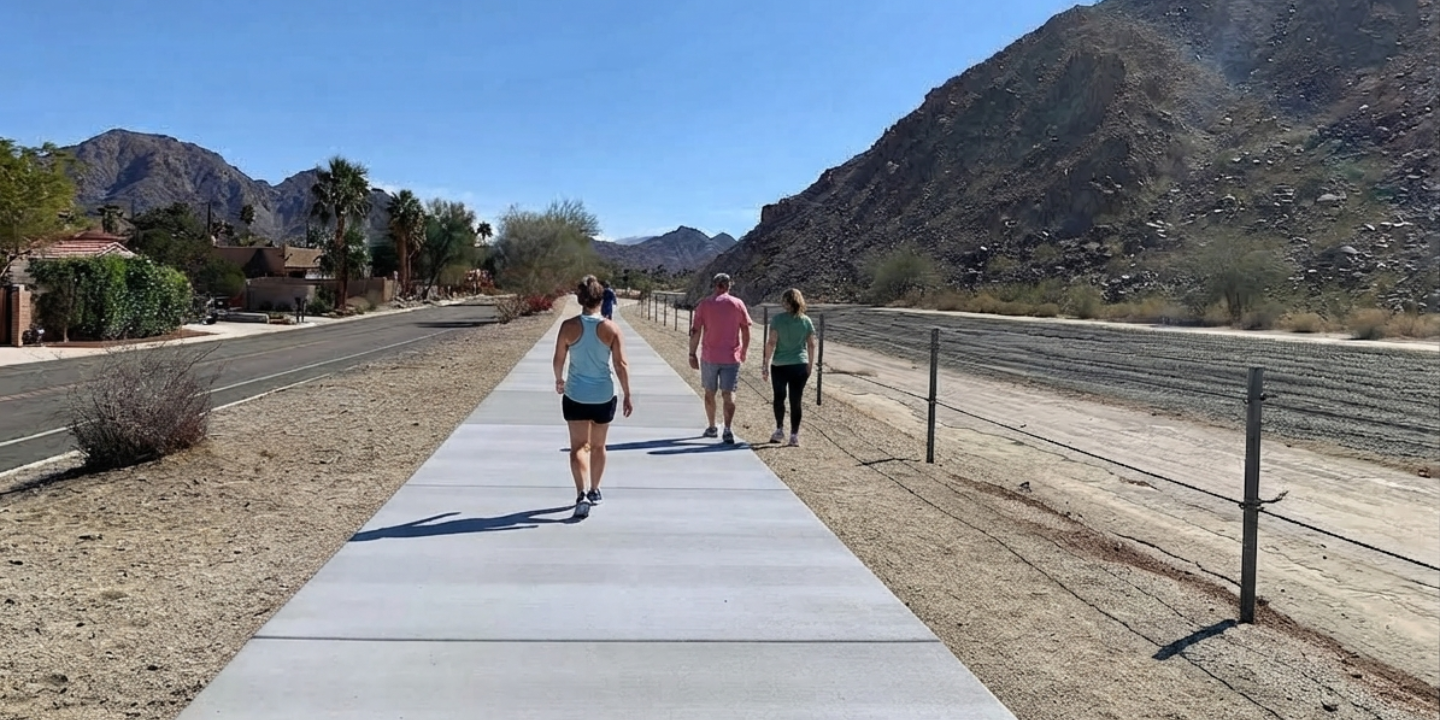
Where the Neighborhood Meets the Mountains
Geography may be the Cove's most defining characteristic.
The neighborhood pushes directly toward the base of the Santa Rosa Mountains, creating views that can feel remarkably close from residential streets and homes throughout the area. Depending on where you are within the Cove, the mountains may appear at the end of a street, rise behind a home, or dominate an entire view.
That proximity also creates an unusual transition between neighborhood and open desert.
Bear Creek Trail begins near Eisenhower Drive and Calle Tampico and extends approximately 4.75 miles south toward the Fred Wolff Nature Preserve and Cove Oasis Trailhead. At the southern end of the Cove, the 114-acre Cove Oasis natural open-space area provides access to hiking trails including Bear Creek and Boo Hoff.
For residents who enjoy walking, hiking or simply being outside, the desert is not something viewed only from a distance. It is immediately accessible.
I came to appreciate that relationship firsthand while living nearby for nearly a decade. I regularly ran a roughly five-and-a-half-mile route around the Cove, with the terrain creating its own rhythm of climbing and descending, and I spent countless hours walking the area with Bruno, my first Dobermann.
Those miles gave me an appreciation for something photographs cannot completely communicate. In the Cove, the mountains and open desert can feel remarkably close to everyday neighborhood life.
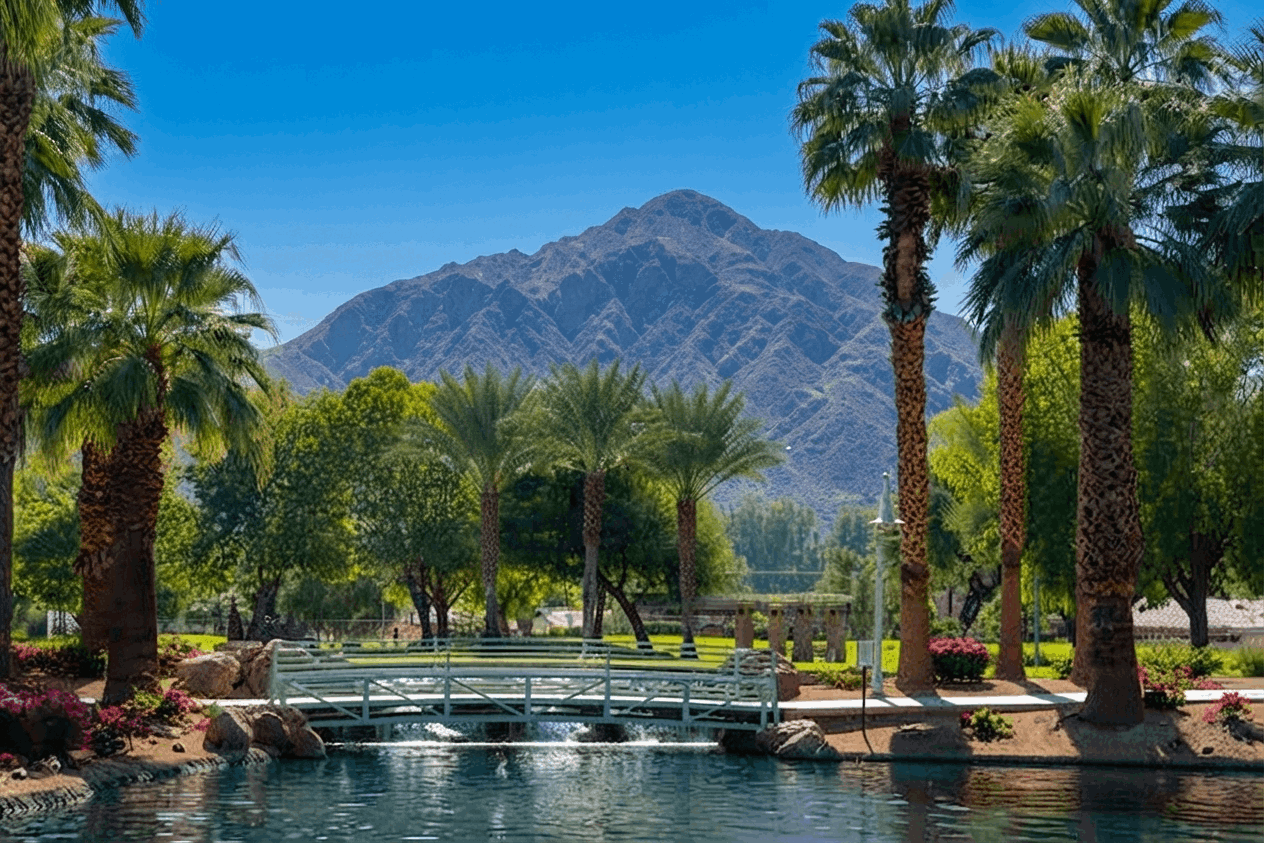
Parks, Open Space and the Heart of La Quinta
The Cove's outdoor character isn't limited to hiking trails.
At the northern edge of the area, the La Quinta Civic Center Campus provides 17.5 acres of landscaped open space adjacent to City Hall, the Library and Wellness Center. Walking paths, public art, picnic areas and a pond and water feature create a very different environment from the rugged terrain farther south, yet the mountains remain a constant visual presence.
Nearby parks and recreational spaces add another dimension to life around the Cove, while the neighborhood's proximity to Old Town La Quinta connects it to one of the city's most recognizable gathering places.
That relationship is an important part of the Cove experience.
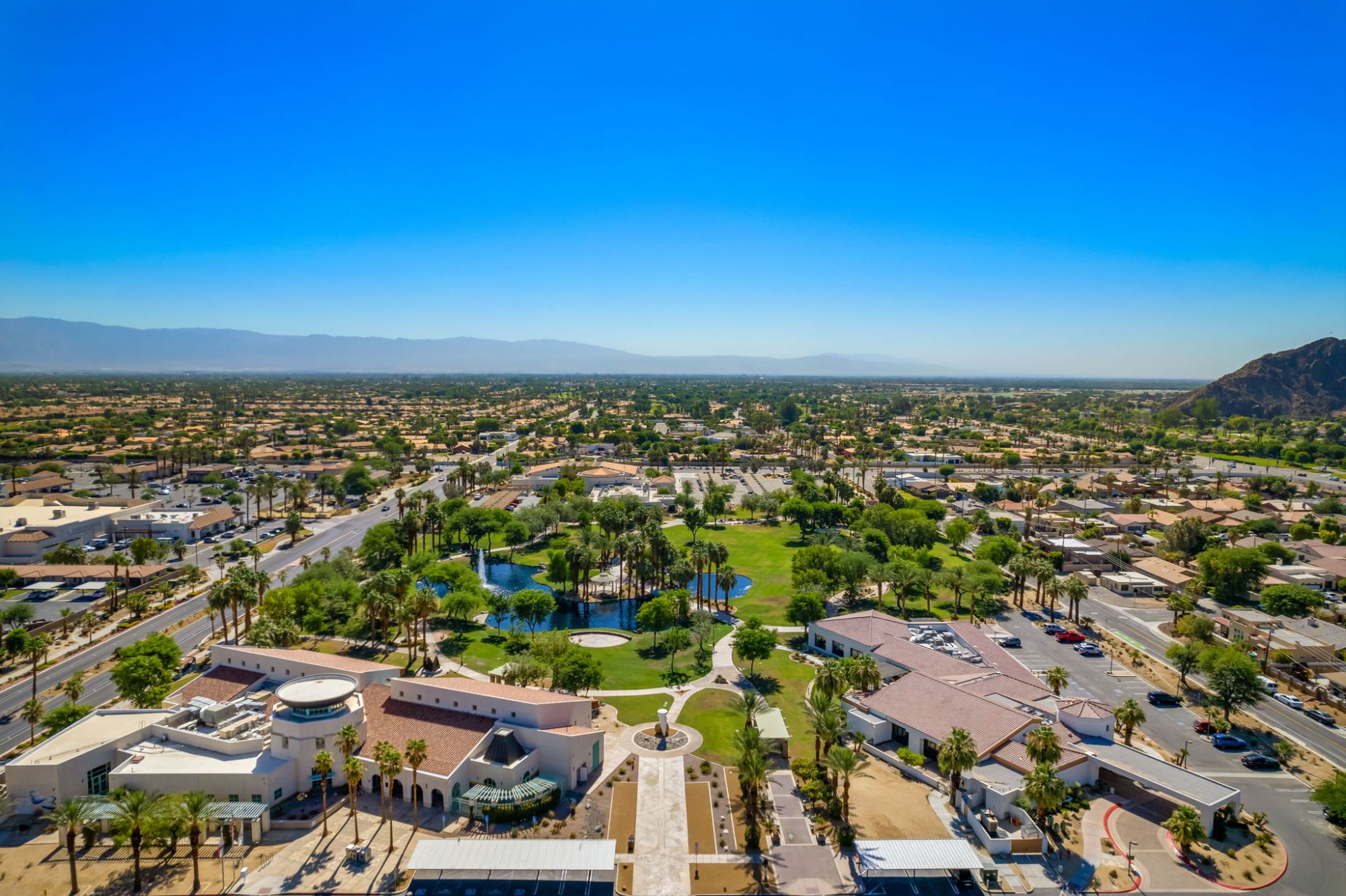
Old Town's restaurants, shops, events and distinctive village architecture sit only minutes from residential streets that can feel tucked against the mountains. The result is an unusual combination: a neighborhood closely connected to the historic and civic heart of La Quinta while remaining immediately adjacent to trails and natural desert open space.
It is one of the reasons the Cove can feel both established and removed at the same time.
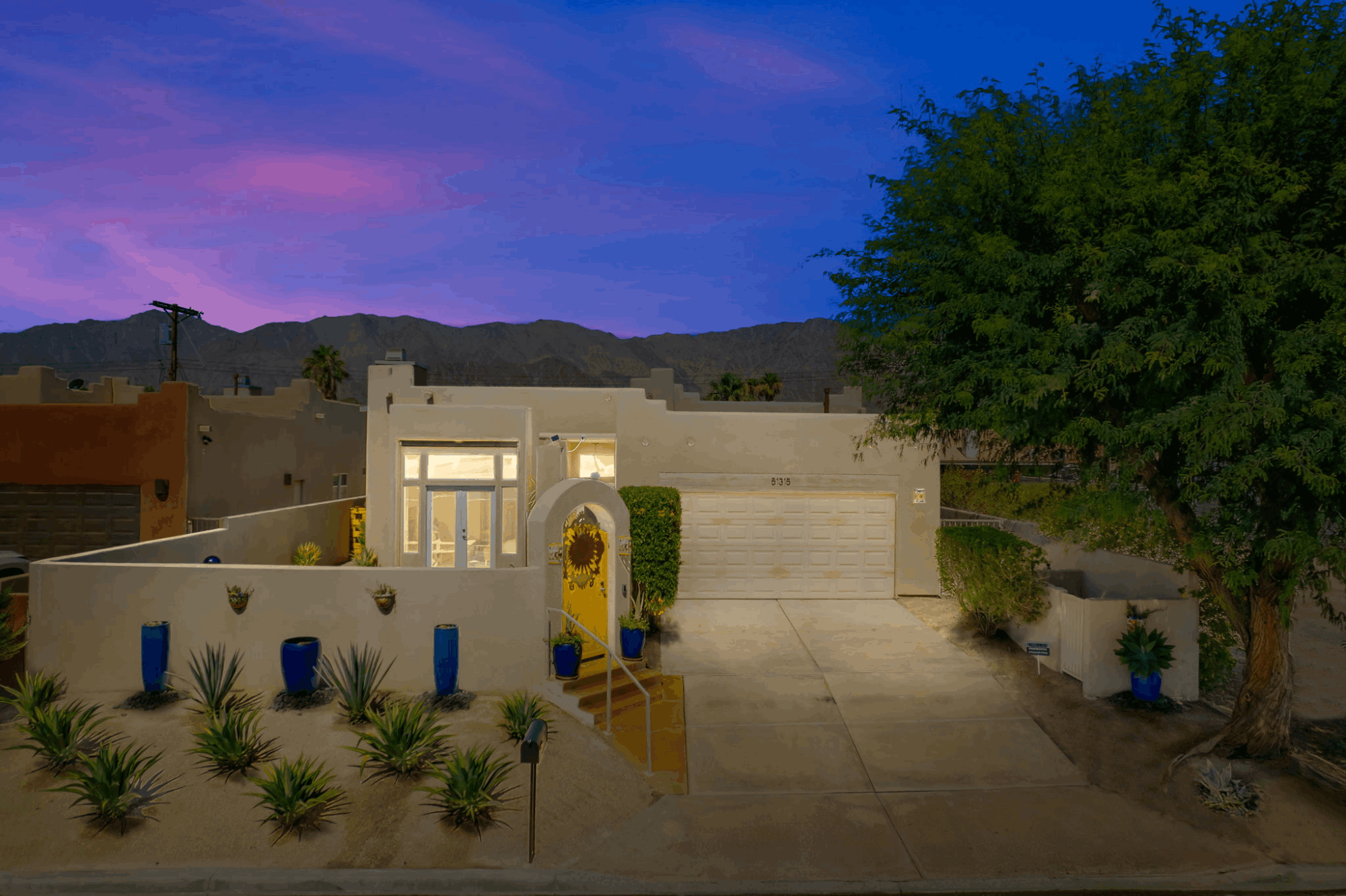
Santa Fe Architecture and an Eclectic Residential Character
When clients ask me to describe La Quinta Cove, one word I often use is eclectic.
Santa Fe-style architecture is the predominant residential theme, with stucco exteriors, parapet rooflines, softly sculpted forms and warm desert colors appearing throughout the neighborhood. Against the surrounding mountains, the style feels particularly appropriate. The earthy architecture and rugged landscape often appear to belong to the same visual palette.
But the Cove is far from architecturally uniform. Spanish-inspired homes, contemporary interpretations and residences from different periods sit throughout its streets, often reflecting the individual tastes of the people who built or remodeled them.
Unlike a master-planned community where homes may have been constructed within a relatively narrow period and according to a predetermined collection of elevations, much of the Cove evolved lot by lot over many decades. As a result, neighboring homes can vary considerably in age, size, architecture and interpretation.
That individuality is part of what makes exploring the Cove interesting. There is no single model home repeated block after block. The neighborhood tells its residential history gradually, one street and one property at a time. Eclectic is exactly what makes it interesting.
Homes Designed Around the Desert
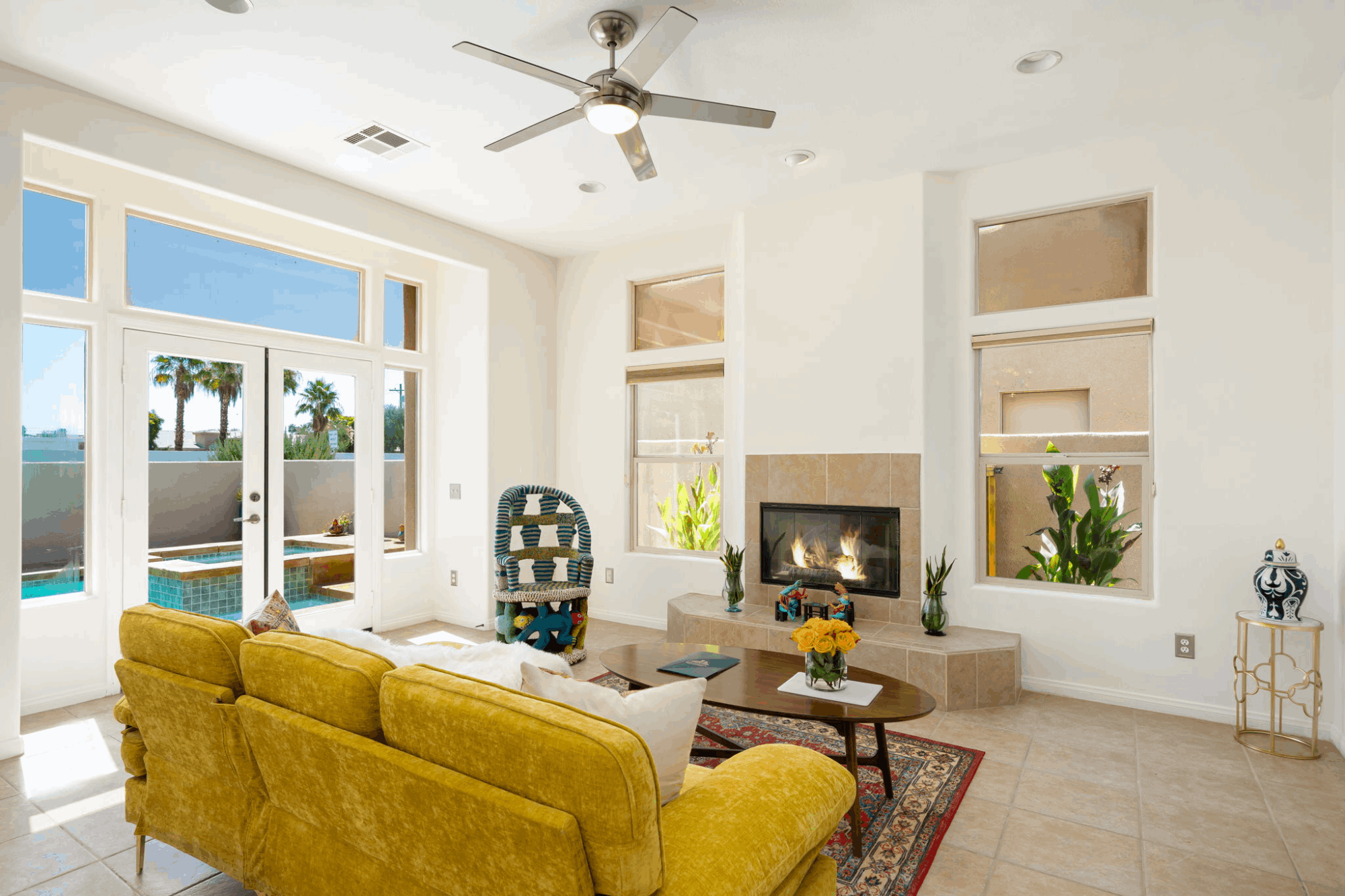
Inside many Cove homes, the relationship with the surrounding environment continues.
High ceilings, fireplaces, abundant natural light, courtyards and direct connections between interior rooms and outdoor living areas are common elements in homes throughout the neighborhood. Renovated properties may reinterpret earlier desert architecture, while newer homes often incorporate more contemporary finishes without abandoning the indoor-outdoor lifestyle that makes the setting so appealing.
Private pools and spas are particularly well suited to the Cove.
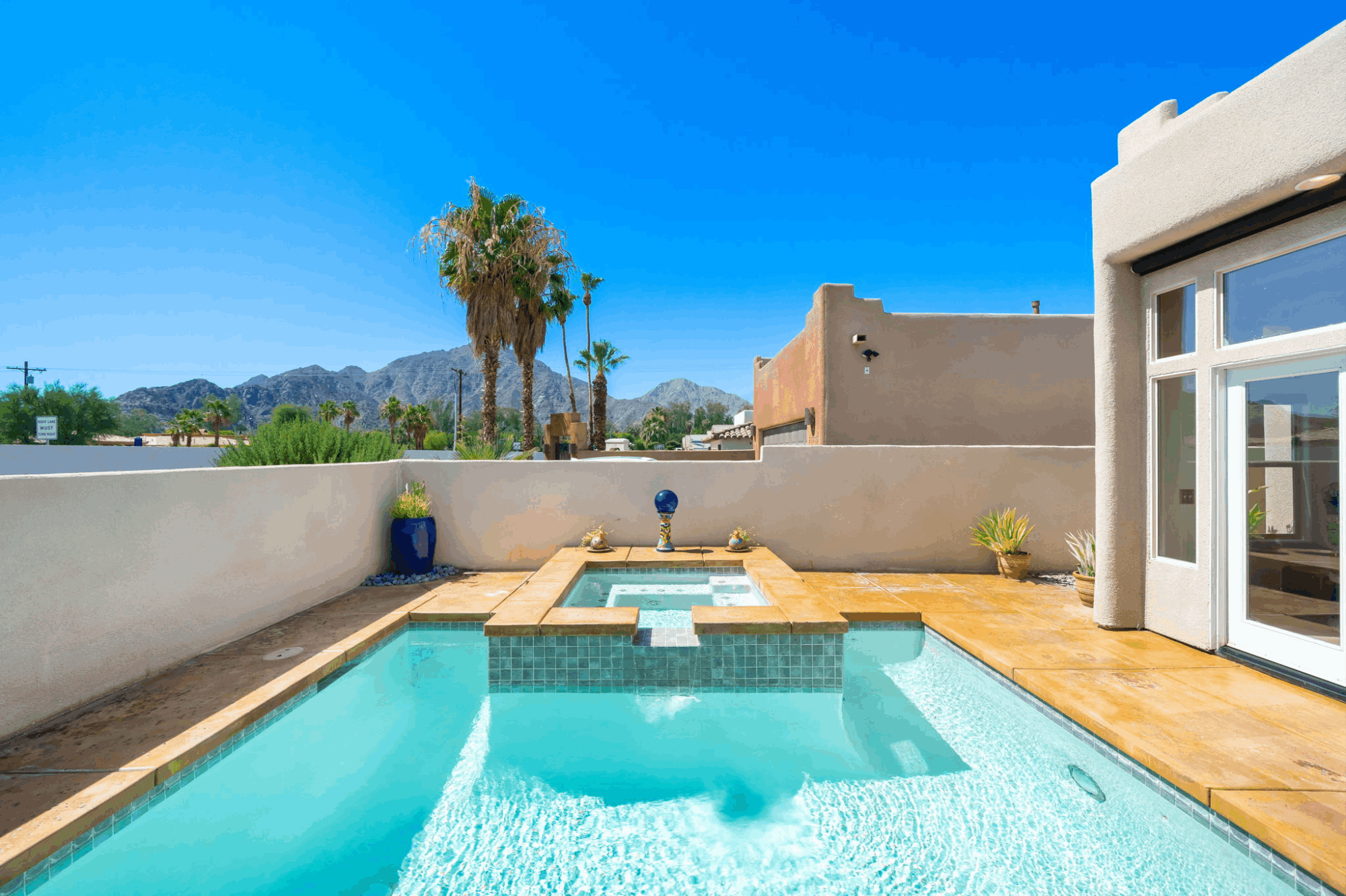
Here, a backyard can become much more than an extension of the house. With the Santa Rosa Mountains rising nearby, outdoor spaces can frame extraordinary views during the day and become quiet places to experience the desert sky after sunset.
That combination of architecture, privacy and mountain scenery helps explain why individual properties within the Cove can have such distinctly different personalities. The street may say La Quinta Cove. The home itself can say something entirely its own.
A Different Side of La Quinta
La Quinta is known internationally for resort communities, championship golf, private clubs and some of the finest gated residential communities in the Coachella Valley.
La Quinta Cove represents another side of the city.
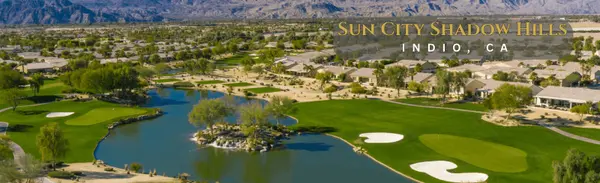
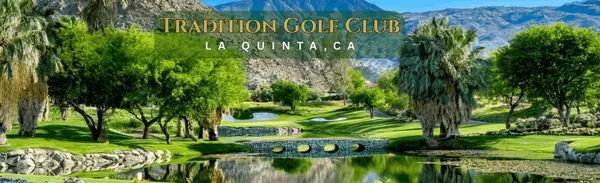
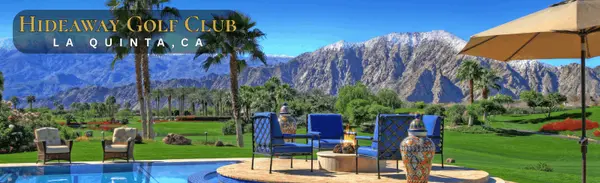
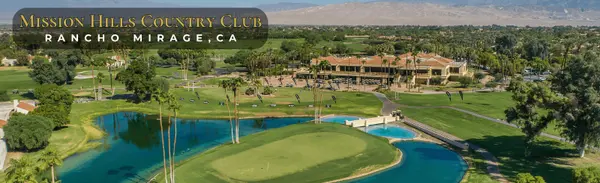
There are no golf-course fairways winding between the homes and no guard gate defining the entrance. Instead, the Cove's identity comes from its history, its architecture, its relationship with Old Town and, above all, its extraordinary physical connection to the mountains.
That distinction is precisely what makes it interesting.
The Cove does not try to replicate the experience of La Quinta's country club communities. It offers something different: an established residential neighborhood where individual homes, mature streets, nearby parks, hiking trails and natural desert terrain come together within one of the city's most recognizable geographic settings.
For buyers, that means individual properties deserve to be considered on their own merits. Location within the Cove, orientation, mountain views, age, renovations, architectural style, lot characteristics and outdoor living spaces can all influence the experience of a particular home.
For sellers, those same differences make thoughtful positioning especially important. A home in the Cove should not be marketed simply as another La Quinta property. Its architecture, setting, views and relationship to the surrounding neighborhood are part of the story.
La Quinta Cove Real Estate
After more than two decades selling real estate throughout Greater Palm Springs, I have learned that neighborhoods are best understood by spending time in them.
La Quinta Cove is a perfect example.
Its history can be researched. Its trails can be mapped. Its homes can be measured and compared. But understanding why the neighborhood feels different requires experiencing the mountains at the end of the street, walking the trails along the edge of the desert, exploring the individual architecture and seeing how closely the Cove connects residential life with Old Town La Quinta.
For nearly a century, people have been drawn to this pocket beneath the Santa Rosa Mountains.
The neighborhood has changed considerably since the first Santa Carmelita de Vale lots were established in 1933, but the fundamental attraction envisioned in those early years remains remarkably easy to recognize today: A home in the desert, with the mountains just outside the door.
Categories
Recent Posts