Experience Rancho Mirage: Playground Of Presidents
Nestled against the foothills of the Santa Rosa Mountains in the heart of the Coachella Valley, Rancho Mirage has long occupied a distinctive place among the desert communities of Greater Palm Springs. Known for its private estates, prestigious country clubs, celebrated architecture, luxury resorts and remarkably tranquil residential setting, Rancho Mirage has cultivated an atmosphere of understated sophistication for generations.
Yet few communities of its size can claim a history involving so many presidents, entertainers, diplomats, business leaders and internationally influential figures. The City of Rancho Mirage has become a place where prominent people came not simply to visit, but to live, gather, relax and, on occasion, conduct matters of national and international importance. From Frank Sinatra, Bob Hope and Dinah Shore to President Gerald Ford and the extraordinary legacy of Walter and Leonore Annenberg at Sunnylands, that remarkable history helped transform Rancho Mirage from a fashionable desert retreat into a community with influence extending far beyond its boundaries.
That history helps explain why Rancho Mirage became known as the “Playground of Presidents.”
From Open Desert to an Exclusive Retreat
Long before Rancho Mirage became synonymous with presidents and celebrities, the surrounding Coachella Valley was home to the Cahuilla people. Much of what would become Rancho Mirage remained sparsely developed desert well into the early twentieth century, with date and grape ranches among the uses of the land during the 1920s.
The character of the community began changing dramatically after World War II. Its relatively sheltered location, mild winter climate and dramatic mountain surroundings attracted developers seeking to create a new kind of desert residential experience.
The breakthrough came with the development of Thunderbird Country Club.
Golf promoter Johnny Dawson recognized the potential of Thunderbird Ranch and neighboring land for an 18-hole golf course and country club. Investors in the project included prominent business figures and Hollywood personalities, among them Bob Hope, Phil Harris and Desi Arnaz. Thunderbird opened in 1951, and its development introduced an influential concept: residential homesites positioned along the golf course itself.
The idea proved enormously successful.
Entertainers including Bob Hope, Bing Crosby and Phil Harris were among the early property owners, helping establish a pattern that would shape Rancho Mirage for decades — private residential living organized around golf, recreation and the desert landscape.
Nearby Tamarisk Country Club, established shortly afterward, reinforced Rancho Mirage's emerging identity as an exclusive desert enclave.
The country-club era had begun.
Hollywood Finds a Home in Rancho Mirage
As Rancho Mirage developed, its combination of privacy, sunshine, golf and proximity to Los Angeles proved irresistible to the entertainment industry.
Among the most enduring names associated with the community is Frank Sinatra.
Sinatra established a major presence in Rancho Mirage, where his desert compound became part of the community's architectural and entertainment history. His connection to the area extended beyond his residence. Frank and Barbara Sinatra were deeply involved in desert philanthropy and became important supporters of what is now Eisenhower Health.
Bob and Dolores Hope were similarly woven into the fabric of Rancho Mirage. Bob Hope was not merely a frequent desert visitor or celebrity golfer; the Hopes became significant members of the community and important contributors to its civic and philanthropic development.
Dinah Shore was another familiar presence in the desert's social and golf culture, and her name remains inseparable from the Coachella Valley's history.
The legacy of these personalities is visible even on a map. Today, motorists traveling through Rancho Mirage encounter Frank Sinatra Drive, Bob Hope Drive, Gerald Ford Drive and Dinah Shore Drive — an unusually vivid reminder of the people who helped define the community's identity.
Sunnylands: Where Desert Privacy Met World History
No place better explains Rancho Mirage's reputation as the Playground of Presidents than Sunnylands, the extraordinary winter estate created by Walter and Leonore Annenberg.
Commissioned in the 1960s and completed in 1966, the estate was designed by noted architect A. Quincy Jones, with interiors by William Haines. Its midcentury modern architecture, expansive grounds and carefully integrated desert setting created something much more significant than an impressive private residence.
Sunnylands became a gathering place.
For more than four decades, the Annenbergs welcomed presidents, international leaders, royalty, entertainers and business figures to their Rancho Mirage home. Guests have included Presidents Dwight D. Eisenhower, Richard Nixon, Gerald Ford, Ronald Reagan, George H.W. Bush, Bill Clinton, George W. Bush and Barack Obama, along with Queen Elizabeth II and numerous international leaders.
President Eisenhower was among Sunnylands' first presidential guests in 1966. Richard Nixon visited the estate repeatedly, including during a pivotal period following his resignation from office. Ronald and Nancy Reagan spent New Year's holidays there throughout Reagan's presidency, and President George H.W. Bush later hosted Japanese Prime Minister Toshiki Kaifu at Sunnylands in 1990.
The Annenbergs ultimately envisioned something even more enduring for their estate: a place where national and world leaders could continue meeting in an atmosphere of privacy and reflection long after they were gone.
That vision became reality.
Gerald and Betty Ford Make Rancho Mirage Home
For President Gerald R. Ford, Rancho Mirage was not simply a presidential retreat.
It was home.
After leaving the White House in 1977, President and Mrs. Ford moved to California and built their post-presidential residence in Rancho Mirage. Designed by the prominent architectural firm Welton Becket Associates, the home became the center of the Fords' desert life.
Gerald Ford remained an active public figure during his years in Rancho Mirage, but his presence also strengthened something more personal about the city's presidential identity. A former President of the United States had chosen Rancho Mirage as the place where he wanted to live after leaving the nation's highest office.
President Ford died at his Rancho Mirage home on December 26, 2006.
His legacy remains deeply connected to the community, as does that of Betty Ford, whose candor and advocacy surrounding addiction and recovery had an enormous national impact.
In Rancho Mirage, the phrase “Playground of Presidents” was never merely promotional language. One of those presidents was a neighbor.
Presidents, Diplomacy and the Continuing Sunnylands Legacy
The presidential story of Rancho Mirage did not end with an earlier generation.
In June 2013, President Barack Obama welcomed Chinese President Xi Jinping to Sunnylands for an unusually informal two-day summit. Rather than the ceremonial environment of Washington, the two leaders met amid the quiet desert surroundings envisioned by the Annenbergs as conducive to serious conversation.
The images of Obama and Xi walking together through the Sunnylands grounds became symbols of what was often described as “shirtsleeves diplomacy.”
Three years later, President Obama returned to Sunnylands to host leaders from the ten member nations of the Association of Southeast Asian Nations for the U.S.-ASEAN summit.
Obama's connection to Rancho Mirage also extended to golf. During desert visits he played at Porcupine Creek, the remarkable private golf property developed by Oracle co-founder Larry Ellison. The property has since evolved into Sensei Porcupine Creek, an ultra-luxury wellness destination.
The circumstances changed. The tradition did not.
Rancho Mirage continued doing what it had done for decades — providing privacy, extraordinary surroundings and an atmosphere in which some of the world's most recognizable people could temporarily step away from public life.
Golf and the Country Club Lifestyle
Golf is not simply an amenity in Rancho Mirage. It is fundamental to the city's development.
Thunderbird helped establish the golf-oriented residential model in the early 1950s. Tamarisk followed, and over subsequent decades communities and clubs continued expanding the concept.
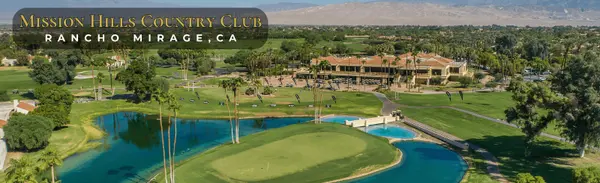
Today, names such as Thunderbird Country Club, Tamarisk Country Club and Mission Hills Country Club remain closely associated with Rancho Mirage's residential landscape.
The appeal goes well beyond the game itself.
Golf communities created generous open space, landscaped fairways, mountain views and a style of residential planning that allowed homes to feel connected to the surrounding desert while maintaining considerable privacy.
That relationship among landscape, recreation and residential design remains one of Rancho Mirage's defining characteristics.
Architecture, Privacy and Desert Sophistication
Rancho Mirage also became a remarkable setting for desert architecture.
Midcentury modern homes, architect-designed estates, country-club residences and later luxury communities reflect different periods in the city's evolution. Sunnylands itself demonstrates how modernist architecture could respond to the desert environment through deep overhangs, walls of glass and a strong relationship between indoor and outdoor spaces.
Across Rancho Mirage, that architectural heritage exists alongside newer homes and communities designed around many of the same principles: mountain views, outdoor living, privacy and a close connection to the landscape.
Unlike destinations where luxury announces itself loudly, Rancho Mirage has traditionally favored something quieter.
Walls, gates, mature landscaping and expansive homesites often conceal far more than they reveal from the street. That discretion is part of the city's character — and one reason it attracted generations of residents who could have lived virtually anywhere.
A Community Built Around More Than Leisure
For all its association with resorts, celebrities and golf, Rancho Mirage also developed institutions that transformed everyday life throughout the Coachella Valley.
Perhaps none is more significant than Eisenhower Health.
The effort to establish a major hospital in the central valley gained momentum during the 1960s, with Bob and Dolores Hope among those playing important roles. The Hopes donated land for the future medical center, while former President Dwight D. Eisenhower and Mamie Eisenhower allowed their name to be associated with the project.
What began as a response to the valley's growing need for medical care evolved into one of the region's defining institutions.
Rancho Mirage today also offers resort properties, restaurants, shopping and entertainment, including The River at Rancho Mirage, while its central location provides convenient access to Palm Desert, Palm Springs and communities throughout Greater Palm Springs.
The result is a city that feels remarkably private without being isolated.
Rancho Mirage Real Estate: Privacy, Prestige and Choice
The same forces that shaped Rancho Mirage historically continue to influence its real estate market today.
Buyers exploring Rancho Mirage homes for sale encounter an unusually broad range of residential opportunities, from midcentury properties and established country-club homes to gated communities, contemporary residences, condominiums and substantial private estates.
Some buyers are drawn to the heritage and fairway settings of established golf communities. Others prioritize newer construction, architectural character, mountain views or the privacy of a gated enclave. Still others simply appreciate Rancho Mirage's central location and comparatively serene residential atmosphere.
The right property therefore depends on more than price or square footage.
It depends on how a buyer wants to experience the desert.
That distinction matters in Rancho Mirage because the city's neighborhoods can offer remarkably different lifestyles within a relatively compact geographic area.
Experience Rancho Mirage
Rancho Mirage has spent more than seventy years developing an identity unlike any other community in Greater Palm Springs.
Thunderbird helped introduce a new vision of golf-oriented desert living. Hollywood personalities discovered privacy beneath the mountains. Frank Sinatra, Bob Hope and Dinah Shore became part of the city's cultural fabric. Gerald and Betty Ford made Rancho Mirage their home. Walter and Leonore Annenberg created an estate where presidents, royalty and world leaders gathered — and then ensured that Sunnylands would continue serving that purpose for generations to come.
Those stories are not simply fragments of Rancho Mirage's past.
They explain the community that exists today.
Rancho Mirage remains a place defined by privacy, architecture, golf, mountain scenery, sophisticated residential communities and an enduring preference for understated luxury. Its most famous residents and visitors may have brought international attention to the city, but the qualities that attracted them in the first place remain remarkably intact.
That is the enduring appeal of Rancho Mirage — the Playground of Presidents.
Categories
Recent Posts